

Sourdough Dandelion Flower Bread - Homemade Recipe
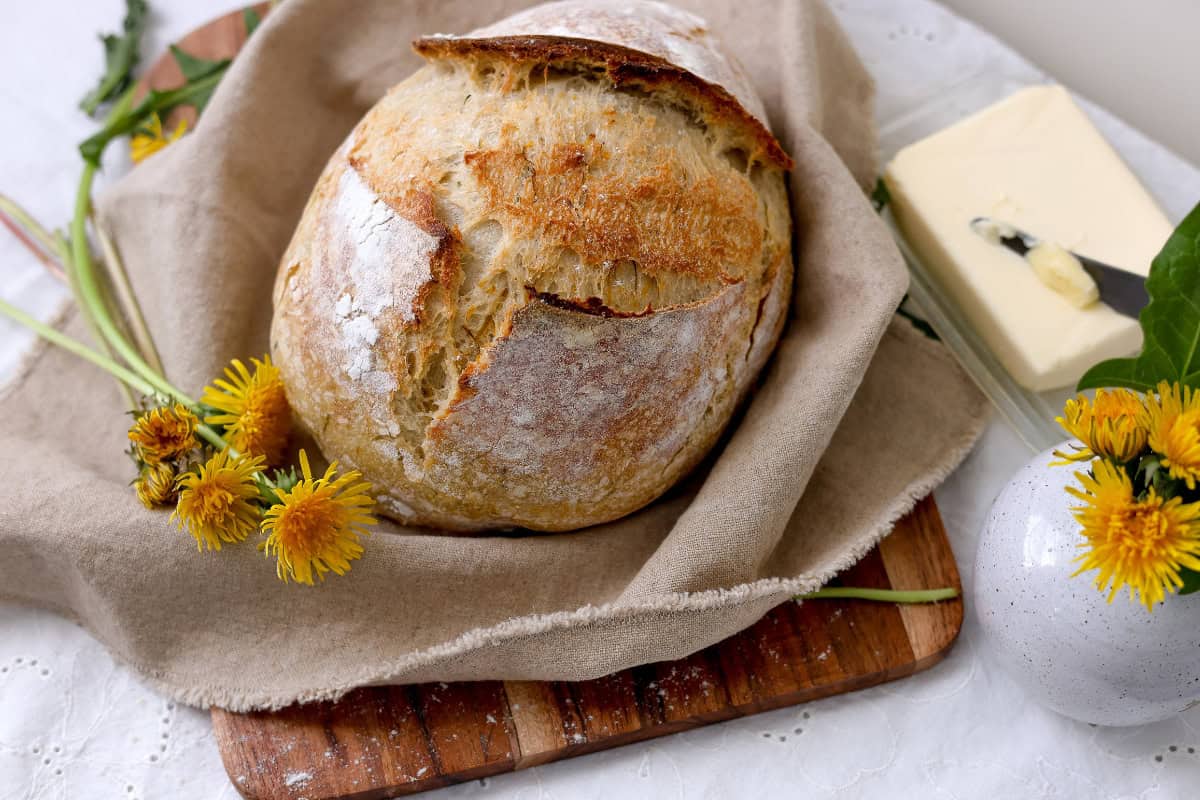
Every spring, our farm gets covered in a carpet of dandelions. Last year, I stopped pulling them and started baking with them. This sourdough dandelion bread recipe has become one of my favourite early spring bakes - the yellow petals turn the crumb a soft pale yellow, and the flavour is subtly floral in a way that genuinely surprises people.
A Quick Look at the Recipe
⏱ Prep Time: 15 minutes
👩🏻🍳 Baking Time: 35 minutes
⏳ Total Time: ~21 hours (bulk ferment + overnight cold proof)
👥 Serving: 2 loaves
🔥 Calories: ~161 kcal per serving
🥣 Main Ingredients: Spelt or all-purpose flour, sourdough starter, fresh dandelion petals, water, salt
👌 Difficulty: Intermediate
Summarize and Save this Content On
🌼 What to Do with Dandelions Beyond the Bread
- The entire dandelion plant is edible - dandelion root and dandelion greens have long been used in teas and traditional medicine for their blood sugar and digestive benefits. If you want to make the most of your spring foraging haul, my Whole Dandelion Tincture uses the roots, greens, and flowers all together. The yellow petals are the mildest, sweetest part of the plant, making them perfect for baking.
- This is a sourdough loaf, not a quick bread. If you search dandelion bread you'll find both - quick bread versions baked in a loaf pan with baking powder, and sourdough versions like this one. If you're newer to sourdough, my Super Soft Sourdough Sandwich Bread is a beginner-friendly starting point.
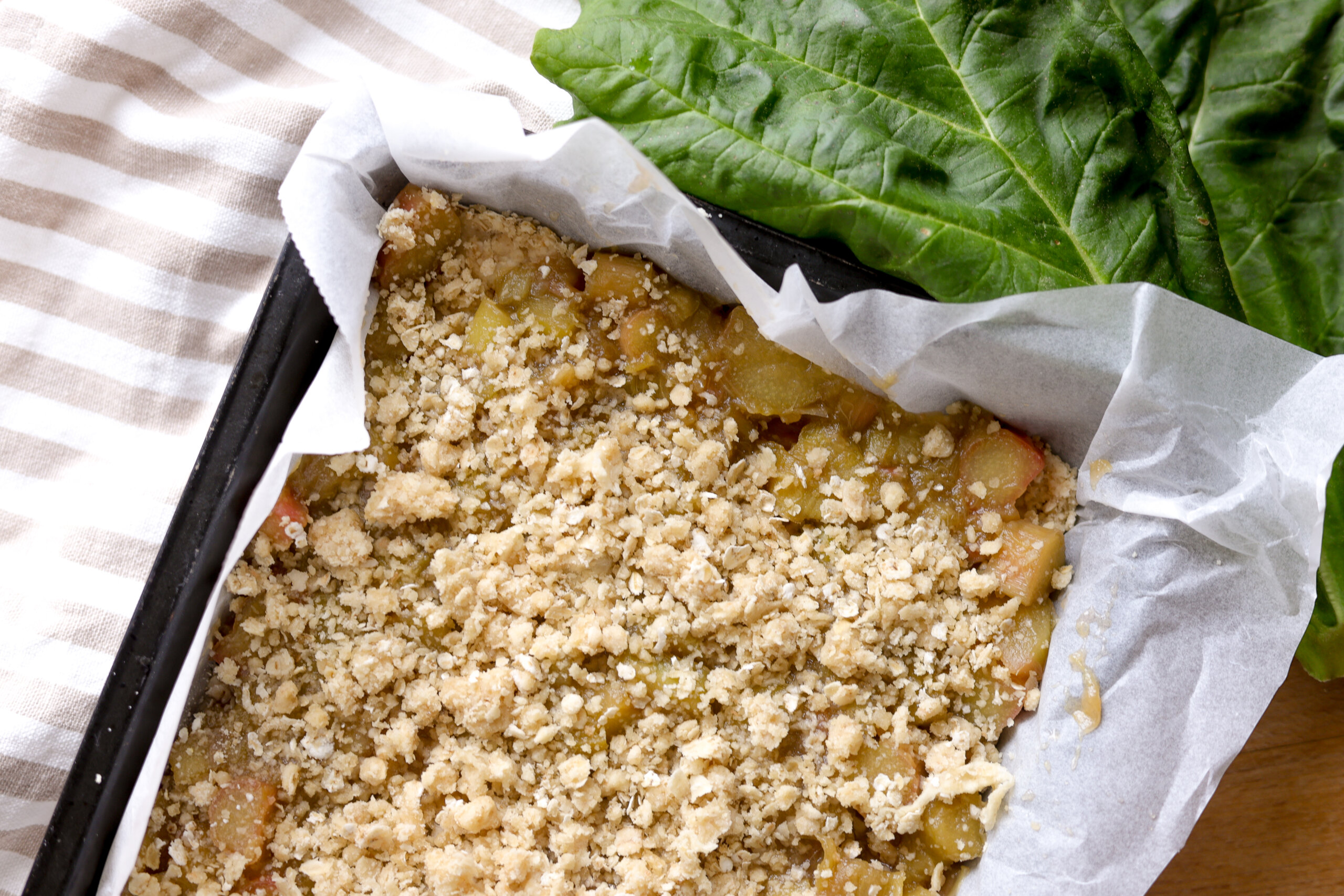
- Dandelion season is short - just a few weeks in early spring, right alongside rhubarb season. If you're harvesting both at once, my Rhubarb Oat Bars are a great companion bake that comes together in under an hour.
Jump to:
🥘 Ingredients
To find the precise measurements, scroll to the bottom of this post to find the recipe card
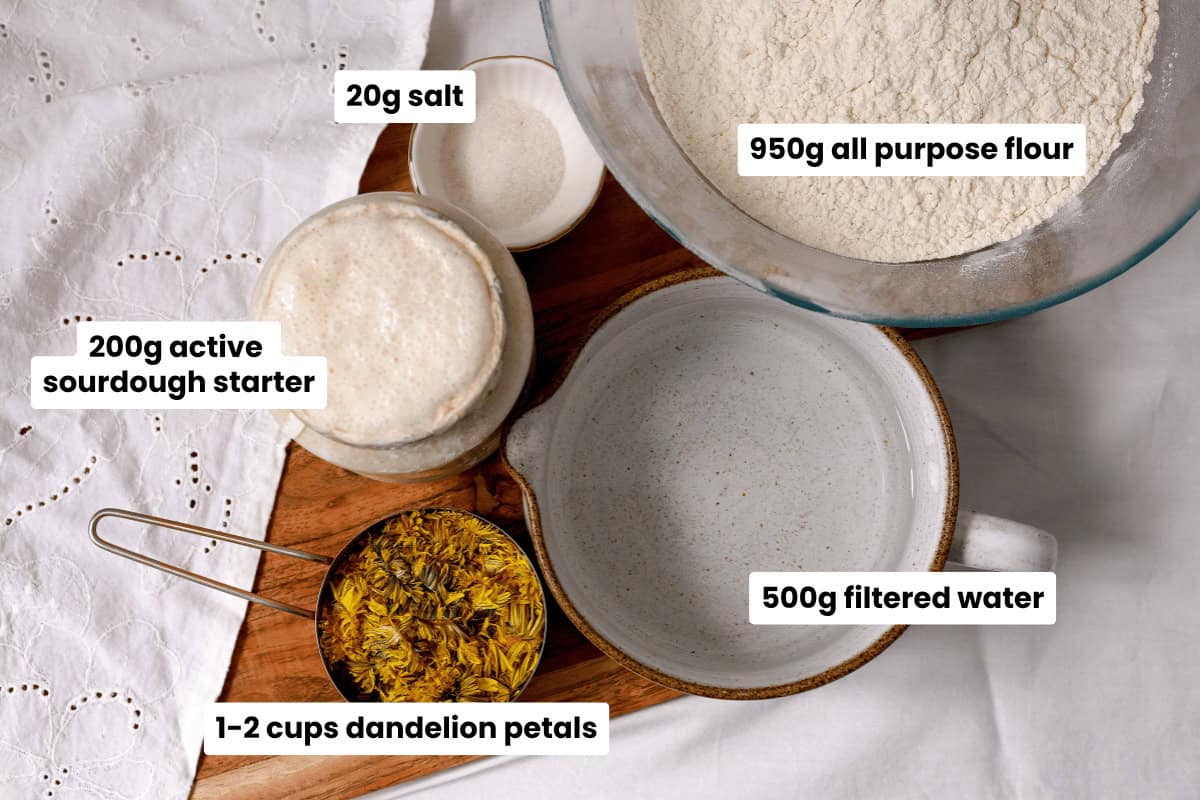
- Bread flour- Spelt is my first choice; its nutty flavour works beautifully with the floral petals but regular wheat bread flour will work perfectly too.
- Filtered water - Chlorinated tap water can slow fermentation.
- Active sourdough starter - Feed it 4-6 hours before mixing so it's bubbly and at peak rise.
- Salt - Don't reduce it; it controls fermentation speed and flavour.
- Fresh dandelion petals - Yellow petals only. Each flower head yields surprisingly few petals - pick more dandelion flowers than you think you'll need.
- Olive oil or vegetable oil - To coat the bowl during bulk fermentation.

Introducing my new Book
Sourdough for Beginners
A step-by-step guide to sourdough success.
Learn the simple rhythm of baking sourdough at home, from starter to first loaf.
Grab your copy ⬇️
🔪 Instructions

Prepare the dandelions. Find good places to forage: your own untreated lawn or any wild edible plants area well away from roads and weed killers. Look for the right flower - bright yellow, fully open dandelion heads, harvested between 8-11 AM when petals are sweetest. Shake or spin in a salad spinner to remove bugs. Do not wash them - rinsing strips the pollen and natural aromas. Snip the yellow petals from the flower heads with scissors, leaving all green parts and green sepals behind. Any green bits make the bread bitter.
Method 1: Stretch and Fold (No Equipment Needed)
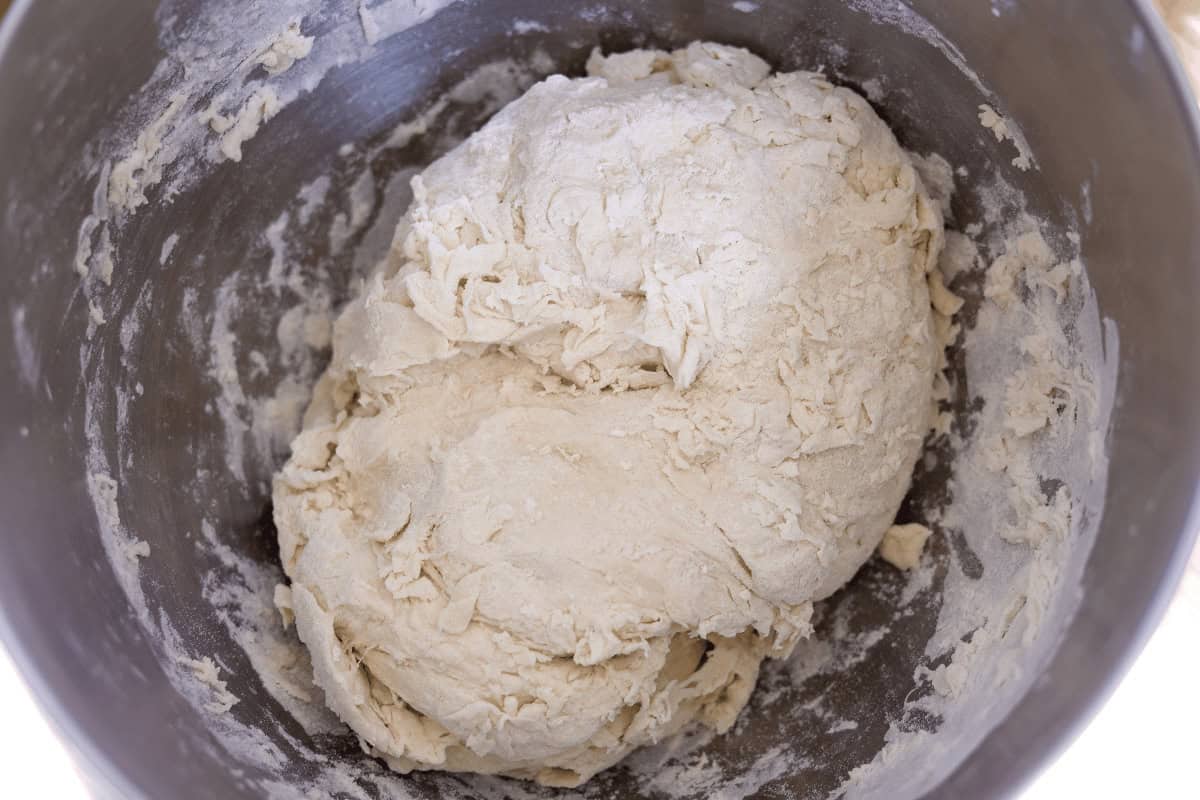
- In a large mixing bowl, combine the flour and water. Mix until no dry flour remains - the dough will look shaggy. Cover and rest for 30 minutes. This autolyse phase lets the flour fully hydrate and makes the dough easier to work with.
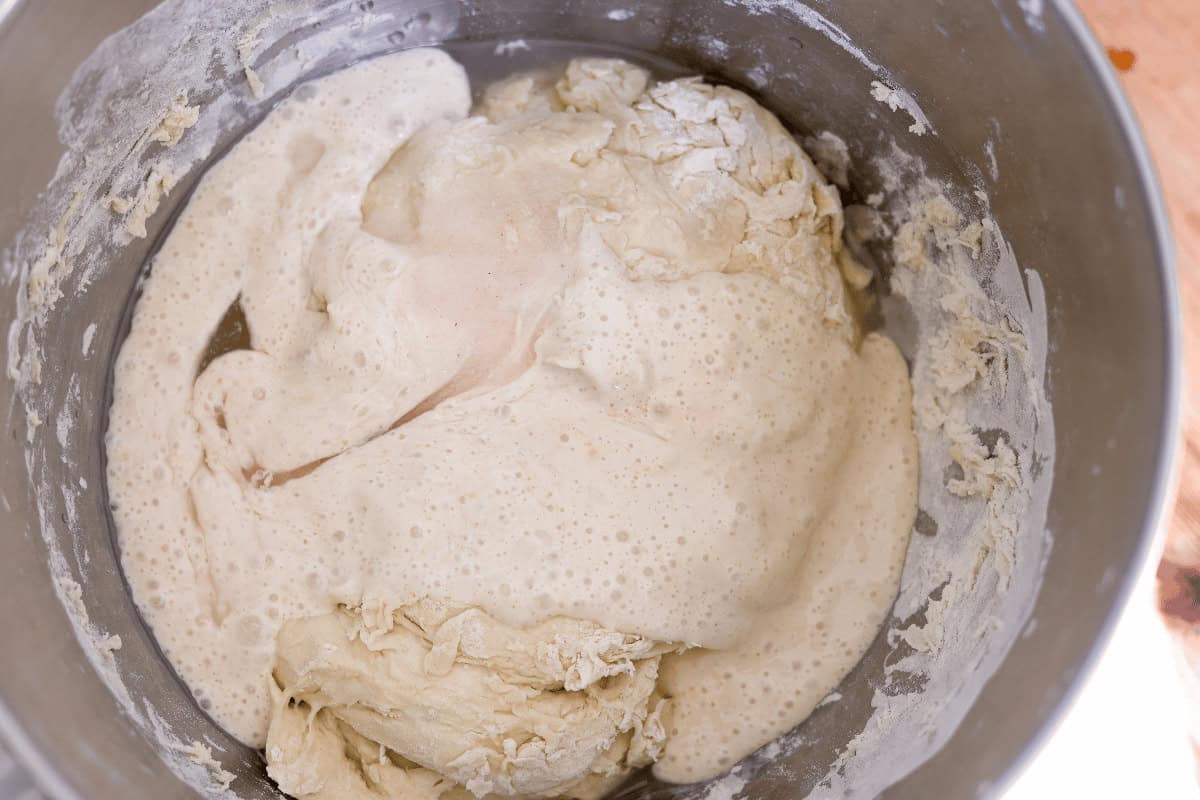
- Add the sourdough starter and salt diluted in a little bit of water directly to the dough. Use wet hands to squeeze and fold everything together until fully incorporated. Cover and rest for another 30 minutes.
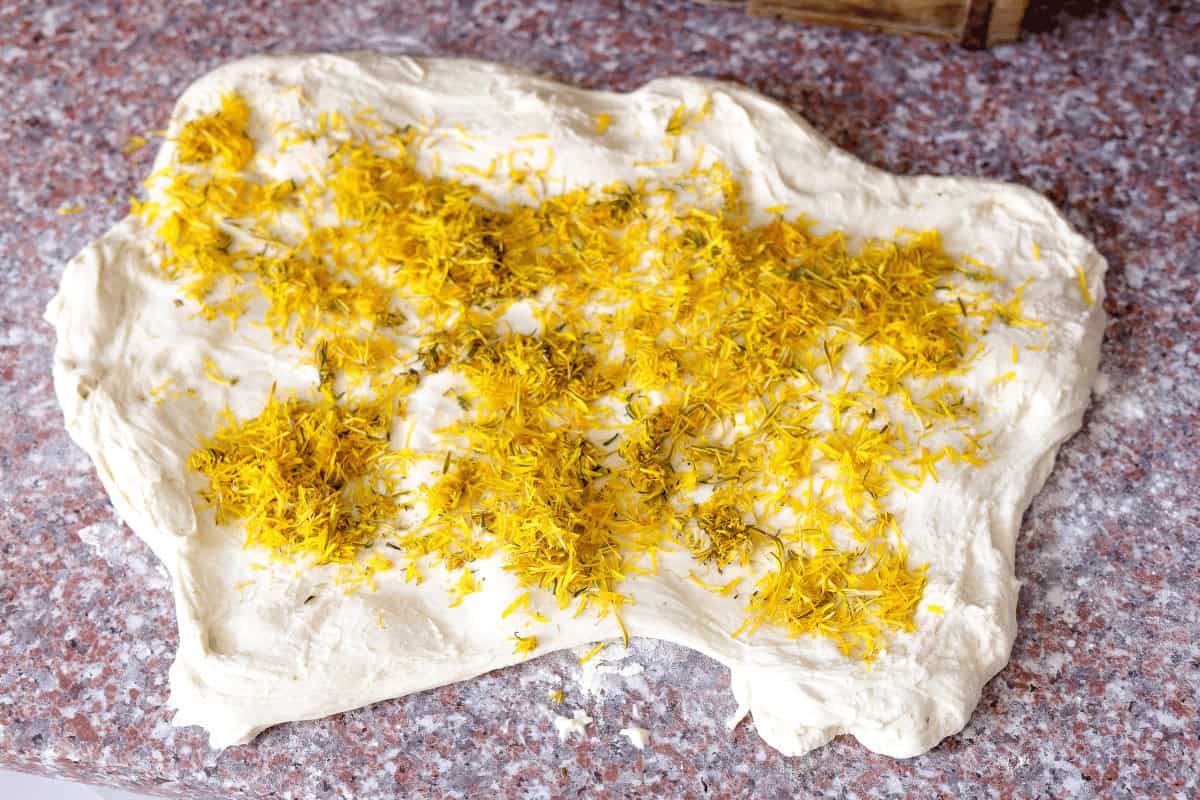
- Turn the dough out onto a well-floured surface. Stretch it out gently into a rough rectangle and scatter the dandelion petals evenly across the surface. Fold the dough like a letter - bottom third up, top third down - then fold in the sides. Return to the bowl.
- Over the next 1.5-2 hours, perform 3-4 sets of stretch and folds every 30 minutes. For each set, wet your hands, grab one side of the dough, stretch it up and fold it over itself. Rotate the bowl 90 degrees and repeat - four folds per set. The dough will get smoother and stronger with each round.
- After the final fold, cover and leave the dough to bulk ferment at 23°C (73°F) for 4-5 hours, or until it has risen by about 60%. The dough should feel airy and show bubbles on the surface and sides.
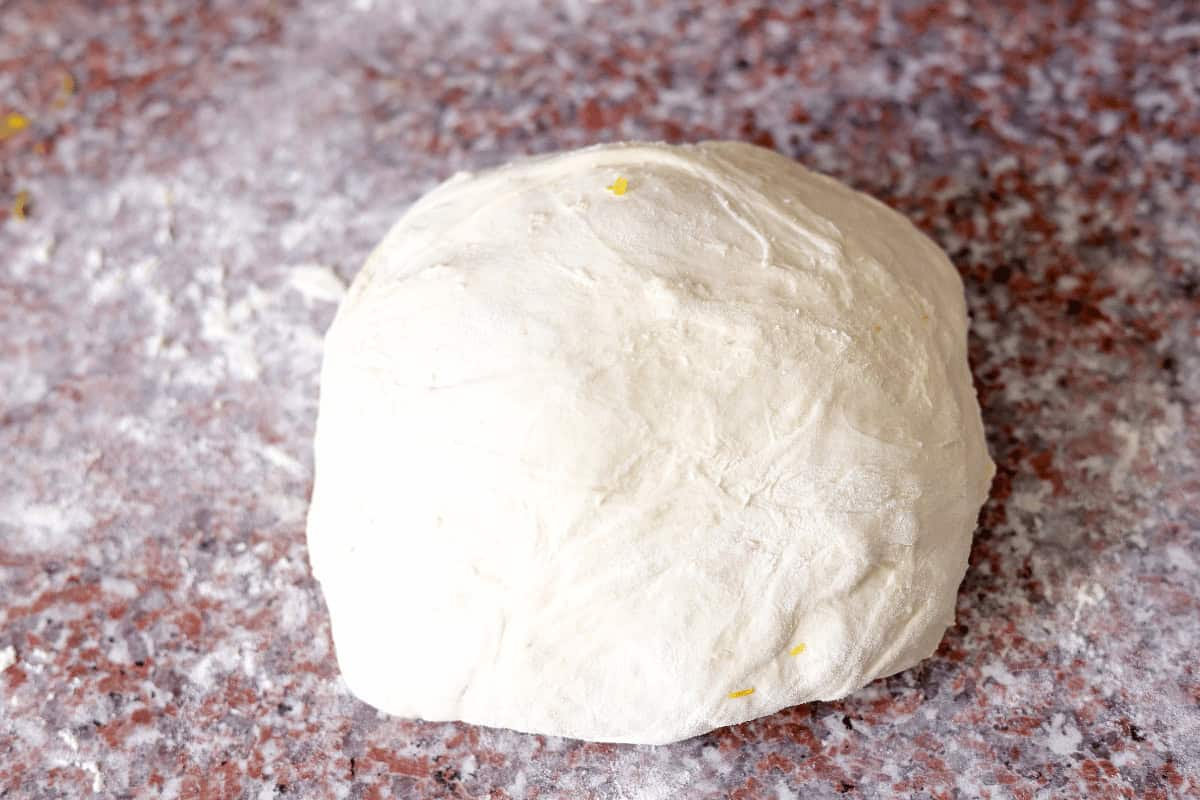
- Turn the dough onto a lightly floured surface and divide into two with a bench scraper. Fold the edges of each piece toward the centre, pinch the seam, and flip seam-side down. Use your hands or the bench scraper to drag each loaf in a circular motion to build surface tension. Place seam-side up in well-floured bannetons, cover, and refrigerate overnight - 8 to 16 hours.
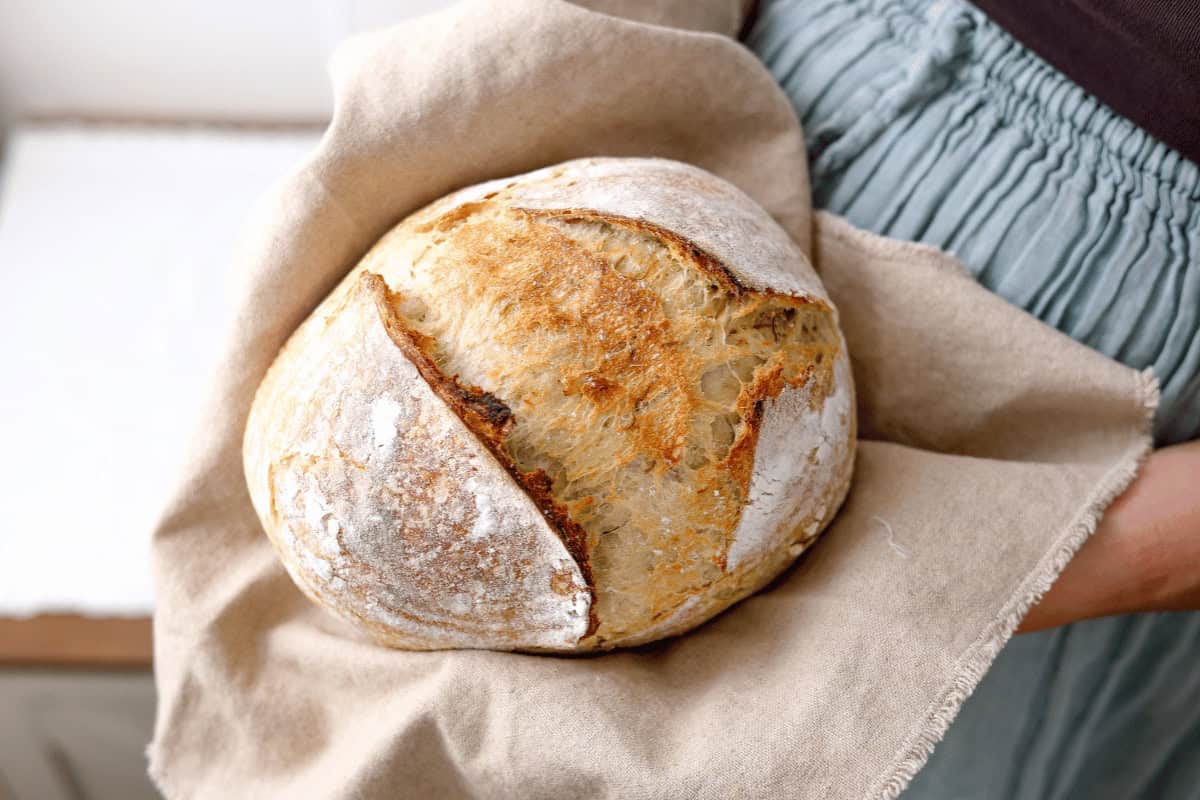
- Preheat your oven to 300°C (570°F) with the Dutch oven inside for a full hour. Turn one loaf out onto parchment paper and score with a lame or sharp knife. Lower carefully into the Dutch oven. Cover and bake 20 minutes without opening the lid. Remove the lid, reduce to 250°C (480°F), and bake another 15 minutes until lightly golden. Cool on a wire rack for at least one hour before slicing.
Method 2: Stand Mixer (KitchenAid)
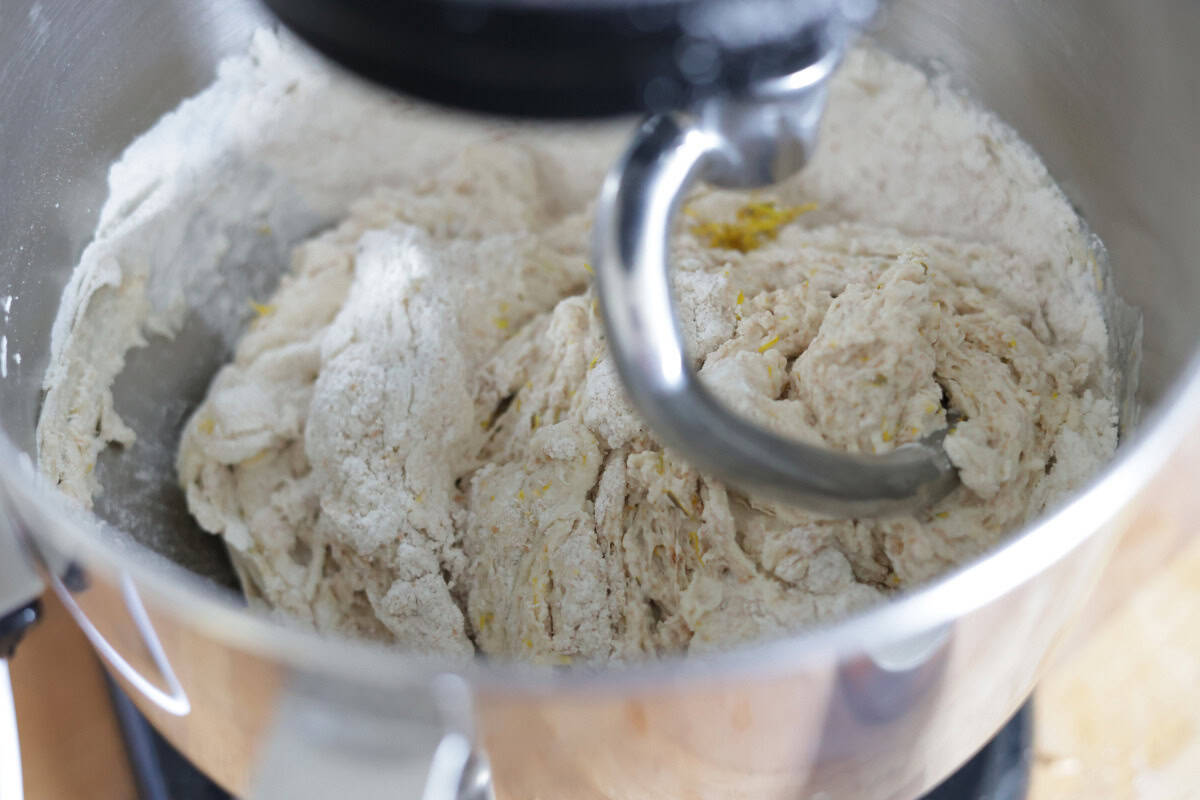
- Add the flour, water, sourdough starter, and salt to the bowl of your stand mixer. Mix on low with the dough hook for 5-7 minutes until the dough is smooth, supple, and pulls away from the sides of the bowl.
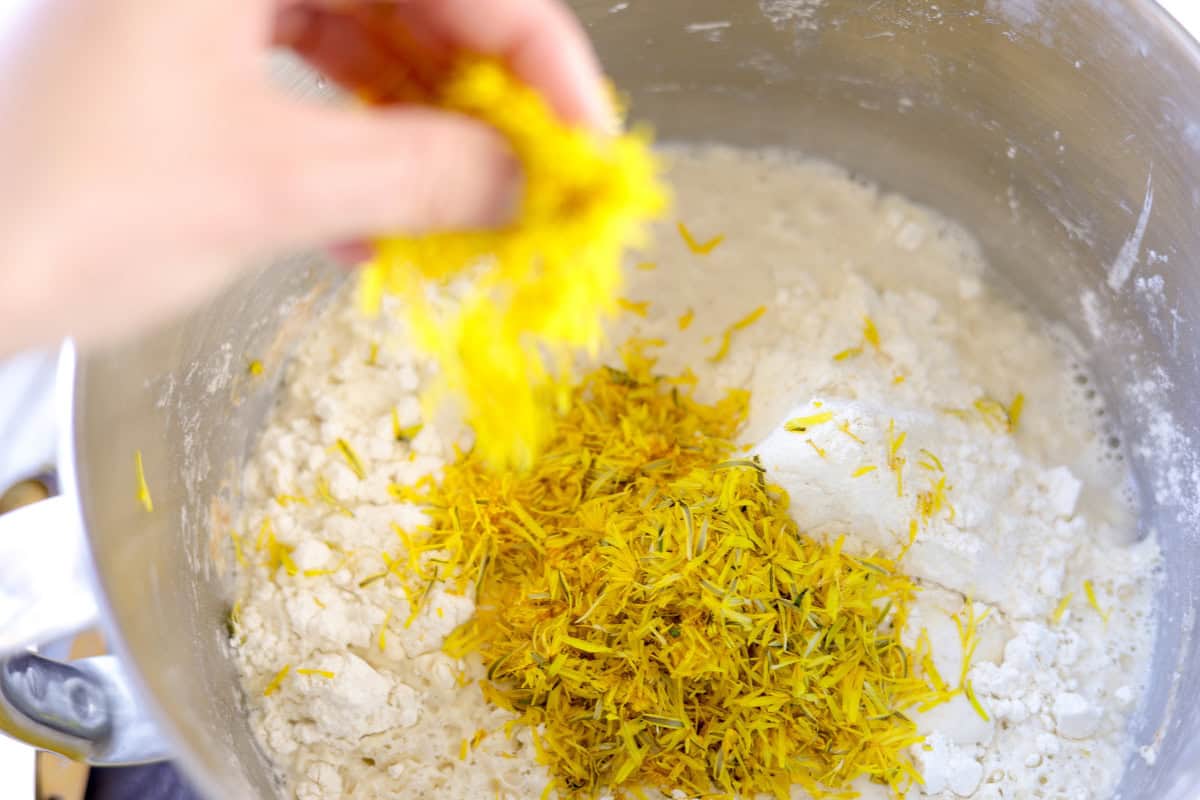
- In the final 30 seconds, add the dandelion petals and let them incorporate gently - adding them at the end preserves their colour and structure.
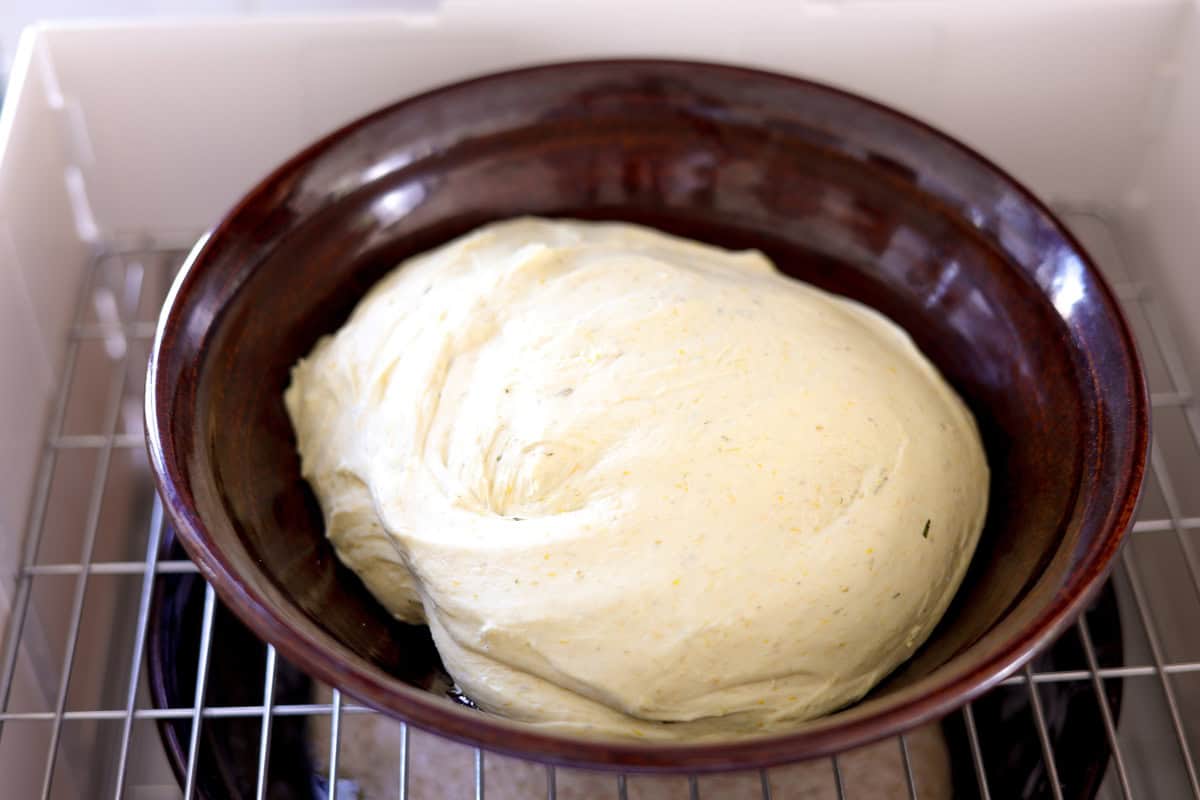
- Drizzle a teaspoon of olive oil into a large bowl, transfer the dough, cover, and ferment at 23°C (73°F) for 4-5 hours, or until risen by about 60%. Because the stand mixer develops gluten more quickly than stretch and fold, the dough will feel stronger going into bulk fermentation - this is normal.
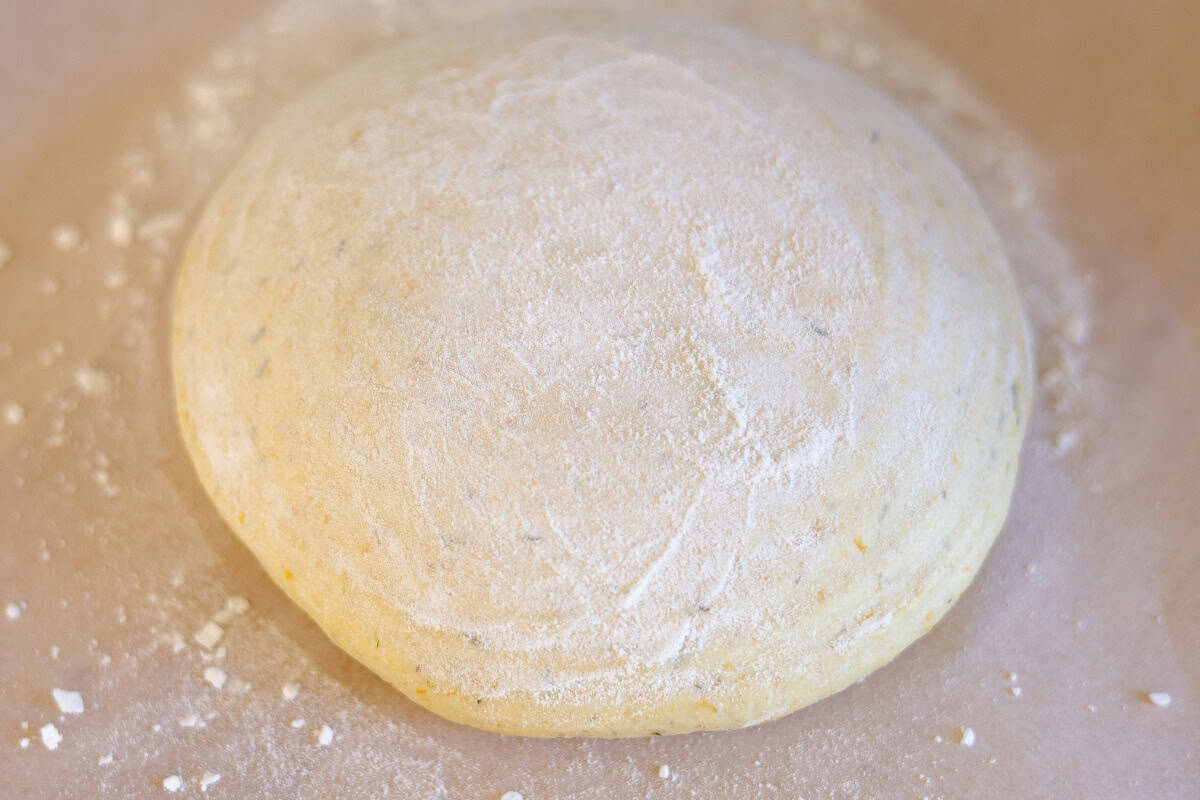
- Shape, cold proof, and bake. Proceed exactly as Method 1 from the shaping step onward.
🥄 Substitutions & Variations
Coconut flour doesn't work here - no gluten. Whole wheat is the best flour swap; add 10-15g extra water. For a richer flavour, replace part of the water with coconut milk. Add 20g of dandelion honey to the dough for a deeper floral note. Other edible flowers work well too - violets, nasturtiums, elderflowers. No dandelions? This rosemary olive oil bread makes a lovely spring loaf. Or if you're craving something bold and savory, my Sourdough Cheddar Jalapeño Bread is a year-round favorite with a completely different personality.
🥣 Storage
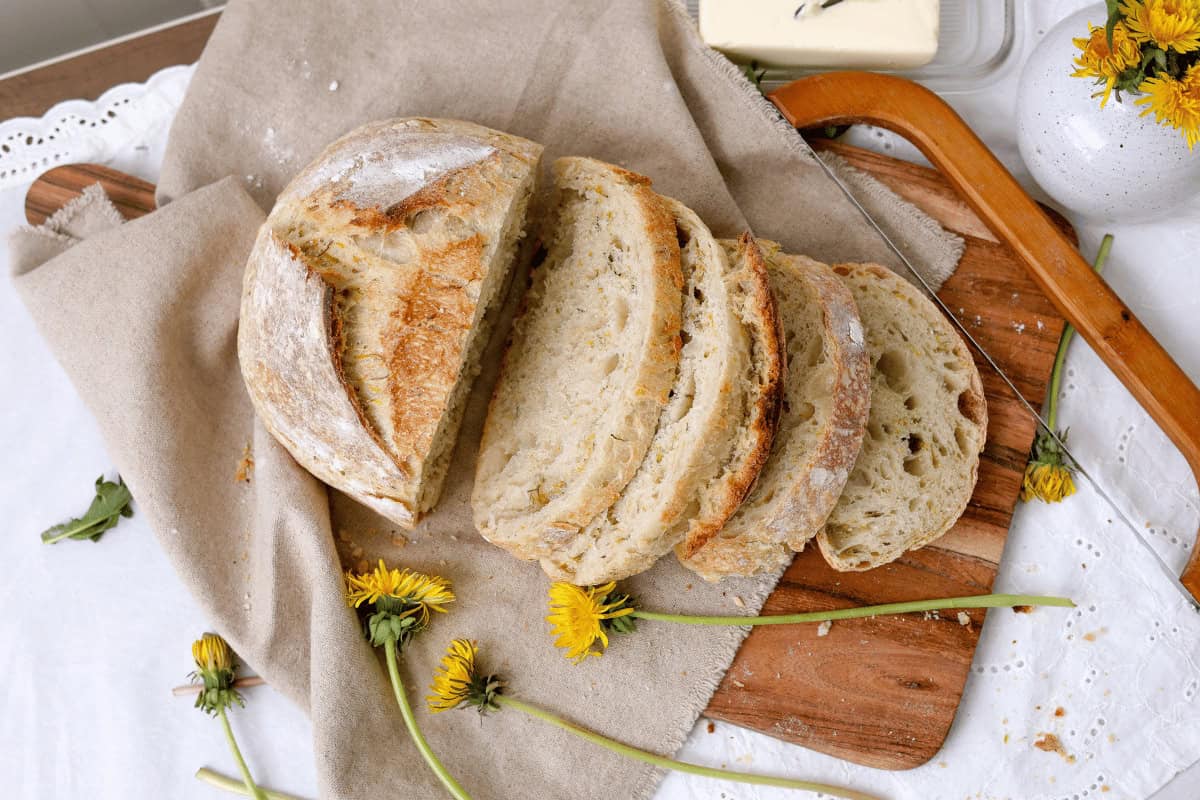
Store cut-side down on a board or in a paper bag for 3-4 days. A little butter on the cut face keeps it from drying out. Slice and freeze for up to 3 months - toast straight from frozen. Don't refrigerate; it dries the bread faster than room temperature storage.
💭 Tereza's Top Tips
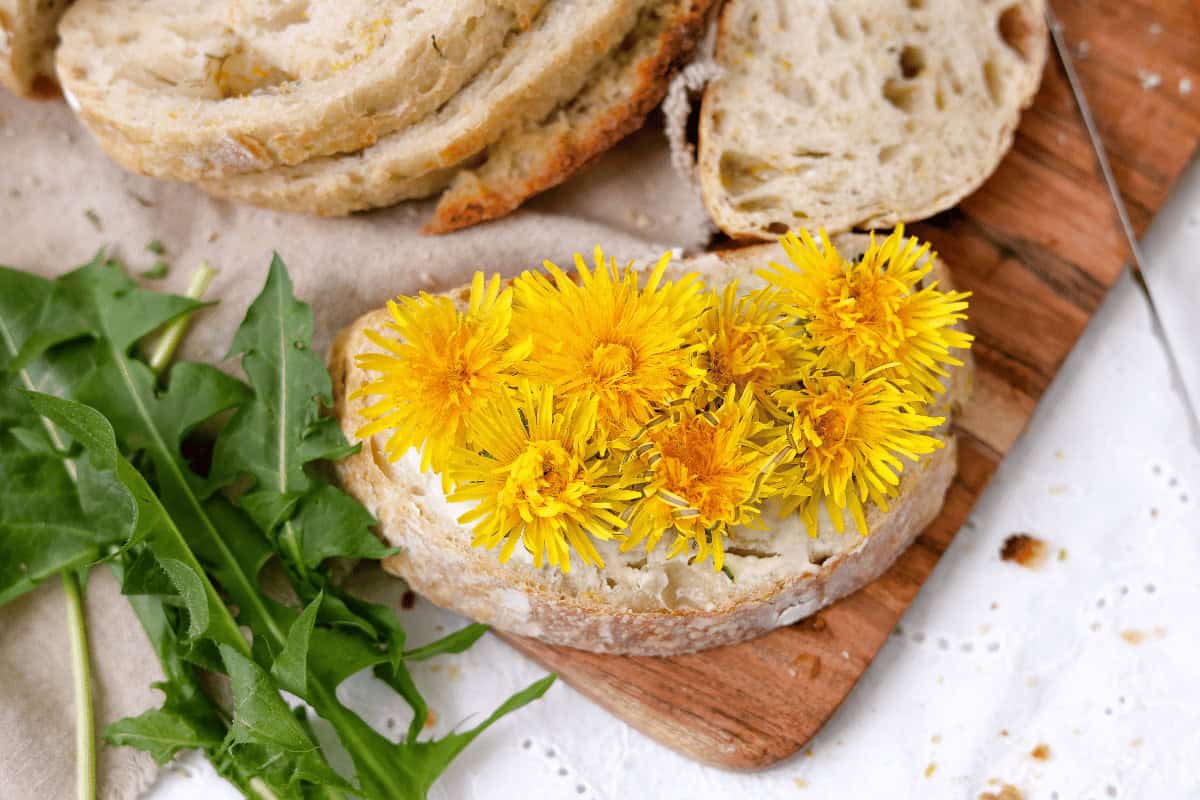
Don't wash the petals - you'll lose everything that makes this bread special. And pick in the morning. Petals harvested between 8-11 AM are sweeter, more aromatic, and hold their yellow colour better in the crumb. Next time you walk past a field of dandelions, stop and fill your pockets.
🧂FAQ
No - that bitterness lives entirely in the green parts. Yellow petals alone taste mildly honey-like.
Yes, but rehydrate in warm water for 15 minutes and use half the quantity. The colour effect in the crumb will be minimal.
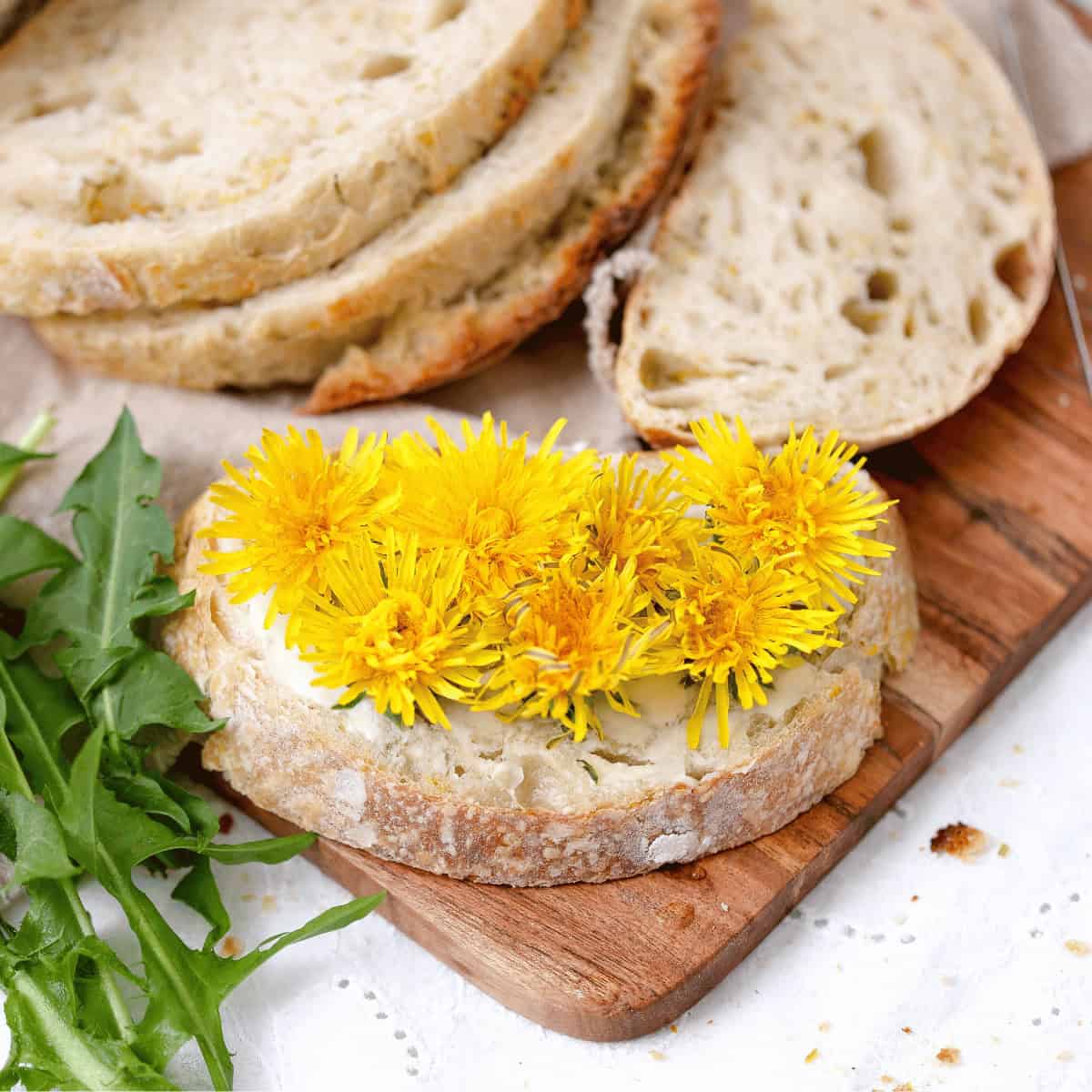
Butter, dandelion honey, soft cheese, or a fried egg on toast. It's also wonderful alongside spring greens soup.
Yes - score, wrap tightly, freeze up to one month. Bake from frozen, adding 10 minutes to the covered bake time.
Tried this Dandelion Bread Recipe? Scroll down to the recipe card and leave a star rating - it takes two seconds and helps other bakers find this recipe.
Related
Looking for other recipes like this? Try these:


Pairing
These are my favorite dishes to serve with sourdough dandelion bread



📖 Recipe
Sourdough Dandelion Flower Bread - Homemade Recipe
Equipment
- Scissors
- KitchenAid or Stand mixer with dough hook Stand mixer method only
- Large mixing bowl Stretch and fold method only
Ingredients
- 950 g bread flour
- 500 g filtered water
- 20 g salt
- 200 g active sourdough starter
- 1 - 2 cups of cut dandelion petals
- 1 teaspoon olive oil
Instructions
Prepare the Dandelions
- Find good places to forage: your own untreated lawn or any wild edible plants area well away from roads and weed killers. Look for bright yellow, fully open dandelion heads. Shake or spin in a salad spinner to remove bugs. Do not wash them - rinsing strips the pollen and natural aromas. Snip the yellow petals from the flower heads with scissors, leaving all green parts and green sepals behind. Any green bits will make the bread taste bitter rather than floral.
Method 1: Stretch and Fold
- In a large mixing bowl, combine the flour and water. Mix until no dry flour remains - the dough will look shaggy. Cover and rest for 30 minutes.
- Add salt and starter. Add the sourdough starter and salt diluted in a little bit of water directly to the dough. Use wet hands to squeeze and fold everything together until fully incorporated. Cover and rest for another 30 minutes.
- Add the dandelion petals.Turn the dough out onto a well-floured surface. Stretch it out gently into a rough rectangle and scatter the dandelion petals evenly across the surface. Fold the dough like a letter - bottom third up, top third down - then fold in the sides. Return to the bowl.
- Stretch and fold. Over the next 1.5-2 hours, perform 3-4 sets of stretch and folds every 30 minutes. For each set, wet your hands, grab one side of the dough, stretch it up and fold it over itself. Rotate the bowl 90 degrees and repeat - four folds per set.
- Bulk fermentation. After the final fold, cover and leave the dough to bulk ferment at 23°C (73°F) for 4-5 hours, or until it has risen by about 60%. The dough should feel airy and show bubbles on the surface and sides.
- Shape and cold proof. Turn the dough onto a lightly floured surface and divide into two with a bench scraper. Fold the edges of each piece toward the centre, pinch the seam, and flip seam-side down. Use your hands or the bench scraper to drag each loaf in a circular motion to build surface tension. Place seam-side up in well-floured bannetons, cover, and refrigerate overnight.
- Preheat your oven to 300°C (570°F) with the Dutch oven inside for a full hour. Turn one loaf out onto parchment paper and score with a lame or sharp knife. Lower carefully into the Dutch oven. Cover and bake 20 minutes without opening the lid. Remove the lid, reduce to 250°C (480°F), and bake another 15 minutes until lightly golden. Cool on a wire rack for at least one hour before slicing.
Method 2: Stand Mixer (KitchenAid)
- Mix the dough. Add the flour, water, sourdough starter, and salt to the bowl of your stand mixer. Mix on low with the dough hook for 5-7 minutes until the dough is smooth, supple, and pulls away from the sides of the bowl. In the final 30 seconds, add the dandelion petals and let them incorporate gently - adding them at the end preserves their colour and structure.
- Bulk fermentation. Drizzle a teaspoon of olive oil into a large bowl, transfer the dough, cover, and ferment at 23°C (73°F) for 4-5 hours, or until risen by about 60%. Because the stand mixer develops gluten more quickly than stretch and fold, the dough will feel stronger going into bulk fermentation - this is normal.
- Shape, cold proof, and bake. Proceed exactly as Method 1 from the shaping step onward.



I love that this recipe is both beautiful AND nutritious. The fact that it's sourdough too makes it even better!