

Czech Lamb Cake Recipe (Beránek)
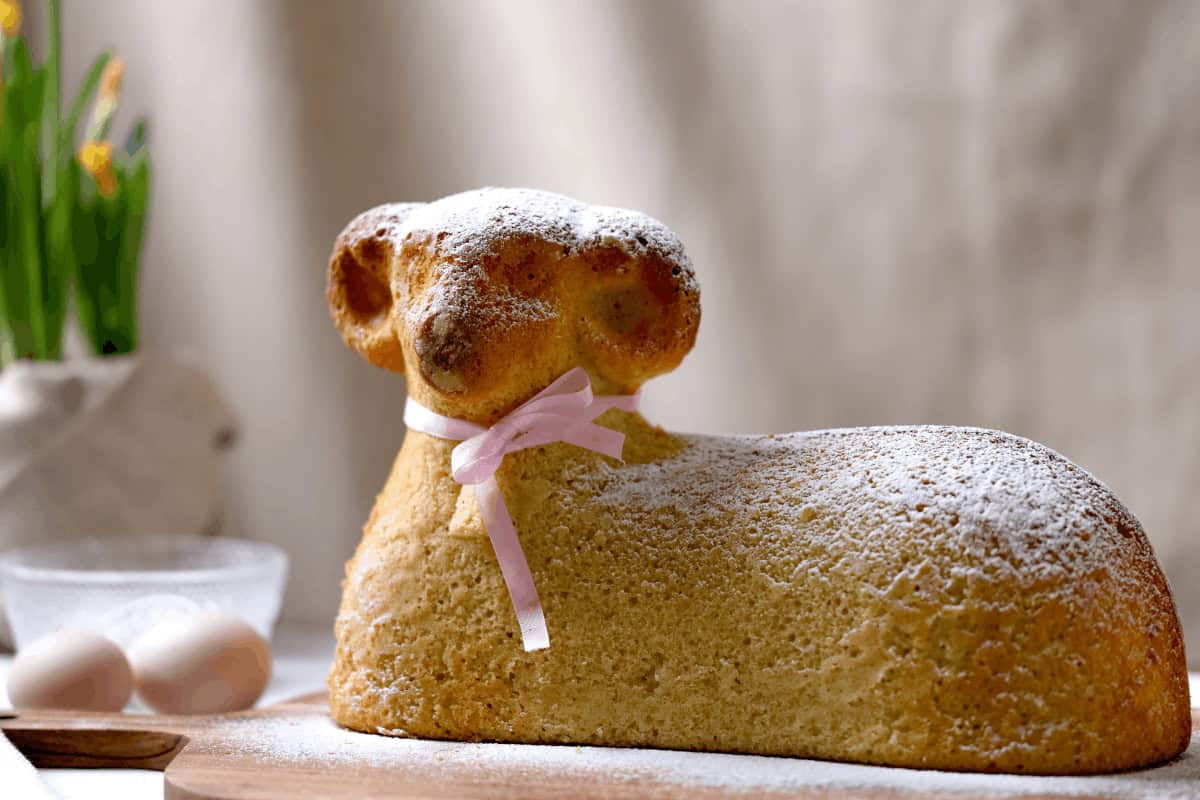
Every Easter growing up, there was always a Czech Easter lamb cake recipe sitting at the center of our holiday table. We called it beránek - little lamb - and it was as much a decoration as it was dessert. My kids feel exactly the same way now, and it's become our most looked-forward-to Easter tradition.
A Quick Look at the Recipe
⏱ Prep Time: 15 minutes
👩🏻🍳 Baking Time: 60-70 minutes
⏳ Total Time: ~90 minutes
👥 Servings: 10-12
🔥 Calories: ~285 per serving (estimated)
🥣 Main Ingredients: All-purpose flour, eggs, whole milk, confectioners' sugar, olive oil, baking powder, rum, lemon zest
👌 Difficulty: Easy - one large bowl, one lamb cake pan, patience at unmolding
Summarize and Save this Content On
The lamb cake recipe is essentially a simple pound cake flavored with rum and fresh lemon zest - the two ingredients that give every Czech bakery beránek its signature flavor, and chances are you already have both on hand. The technique is mostly about one thing: getting the batter into the lamb cake mold correctly, and getting it back out in one beautiful piece.
🐑 The Symbolism Behind Beránek
The lamb at the heart of Easter is older than Easter itself. Long before Christianity, spring lambs carried the meaning of new life, innocence, and the renewal of the seasons - the same themes that gather under Easter today. In Christian tradition the lamb became a symbol of Christ: the Lamb of God, sacrificed and risen on Easter Sunday. For centuries, Czech families actually served roasted lamb at the Easter table, a continuation of the Passover tradition. As lamb meat grew too expensive for most households, the real lamb was replaced - first by a small lamb shaped from sheep's milk cheese, and eventually by the sweet lamb cake recipe we bake today. The beránek at the center of the table carries all of that history: ancient symbols of spring, the Christian story of Easter morning, and a very practical bit of Czech ingenuity. When I pull mine from the mold each year, I think about my grandmother doing the same, and hers before her.
🧁 More Czech Easter Recipes
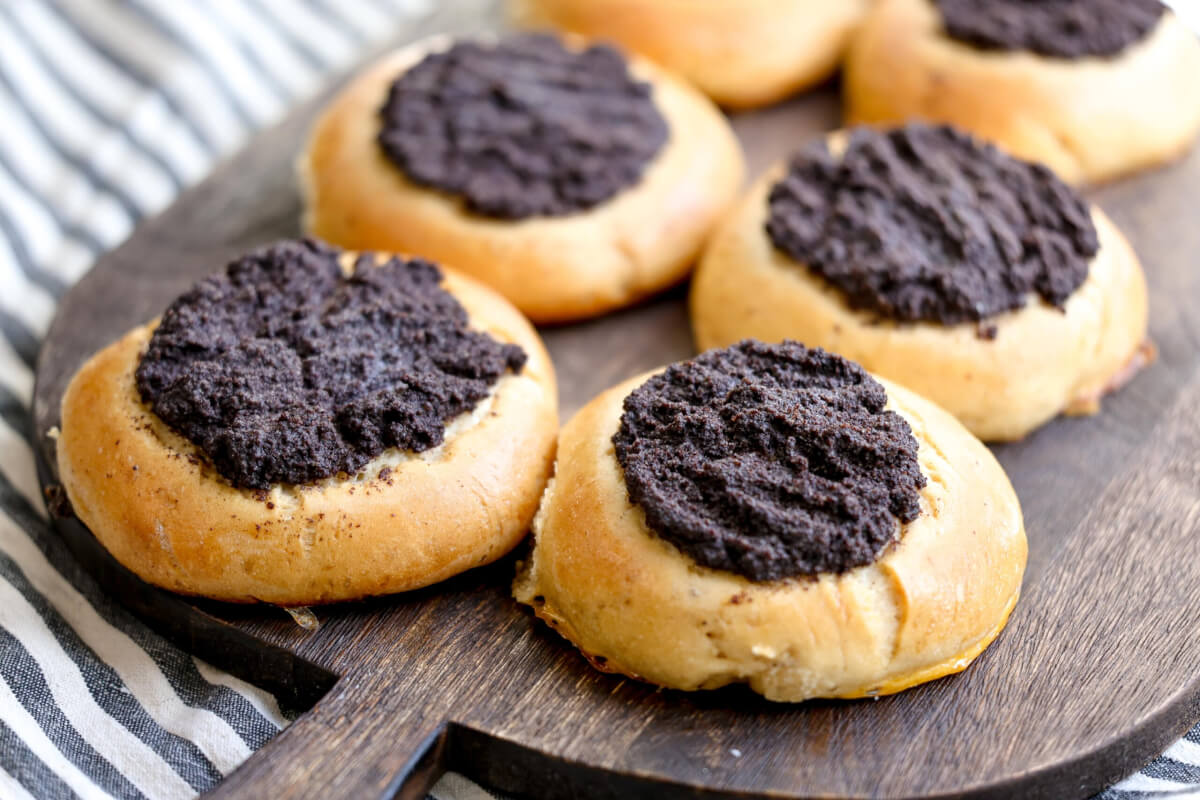
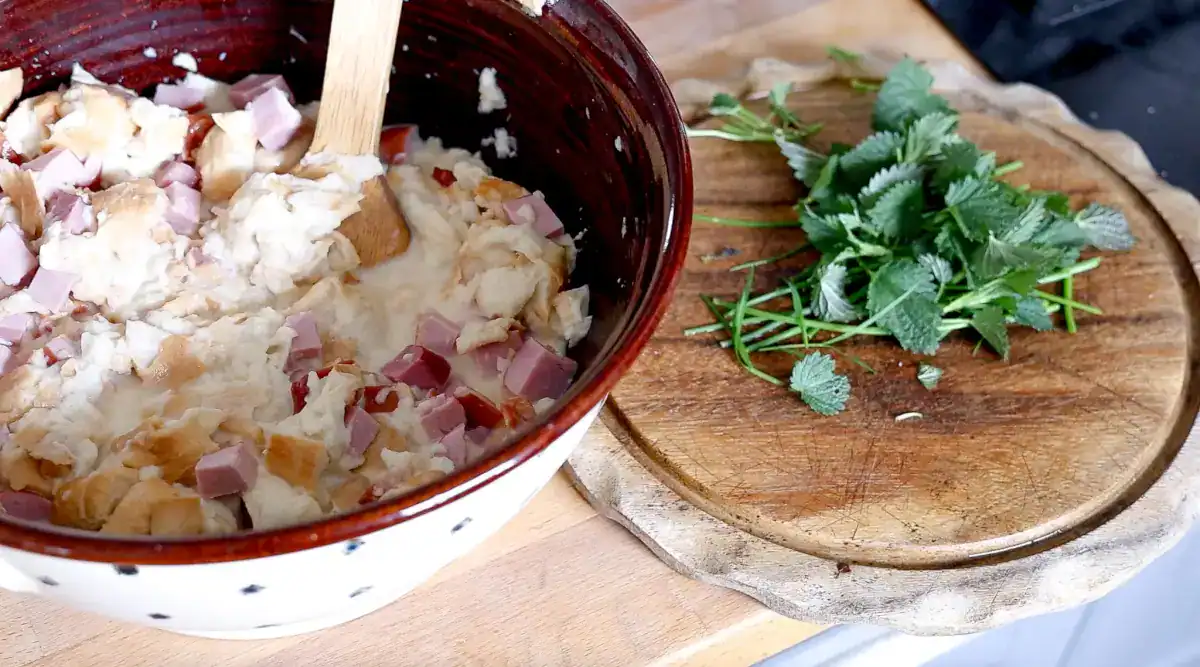
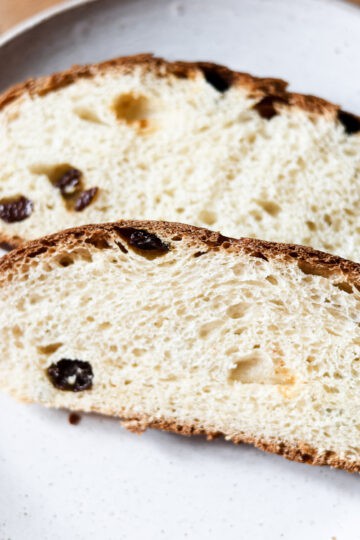
This lamb cake recipe is a natural part of a full Easter spread in the Czech Republic. It pairs beautifully with my Czech Sweet Easter Bread (Mazanec) and Czech Easter Stuffing (Nádivka) - together they make an Easter table that feels genuinely traditional.
Jump to:
- A Quick Look at the Recipe
- 🐑 The Symbolism Behind Beránek
- 🧁 More Czech Easter Recipes
- 🍳 Ingredients
- Sourdough for Beginners
- 🥘 Choosing Your Lamb Cake Mold
- 🍲 No Mold? No Problem
- 🔪 Instructions to make Lamb Cake Recipe
- 🥄 Substitutions
- 👩🏻🍳 Czech Bakery Variations
- 🥣 Storage
- 💭Tereza's Top Tips
- 🧂FAQ
- Related
- Pairing
- 📖 Recipe
- 💬 Community
🍳 Ingredients
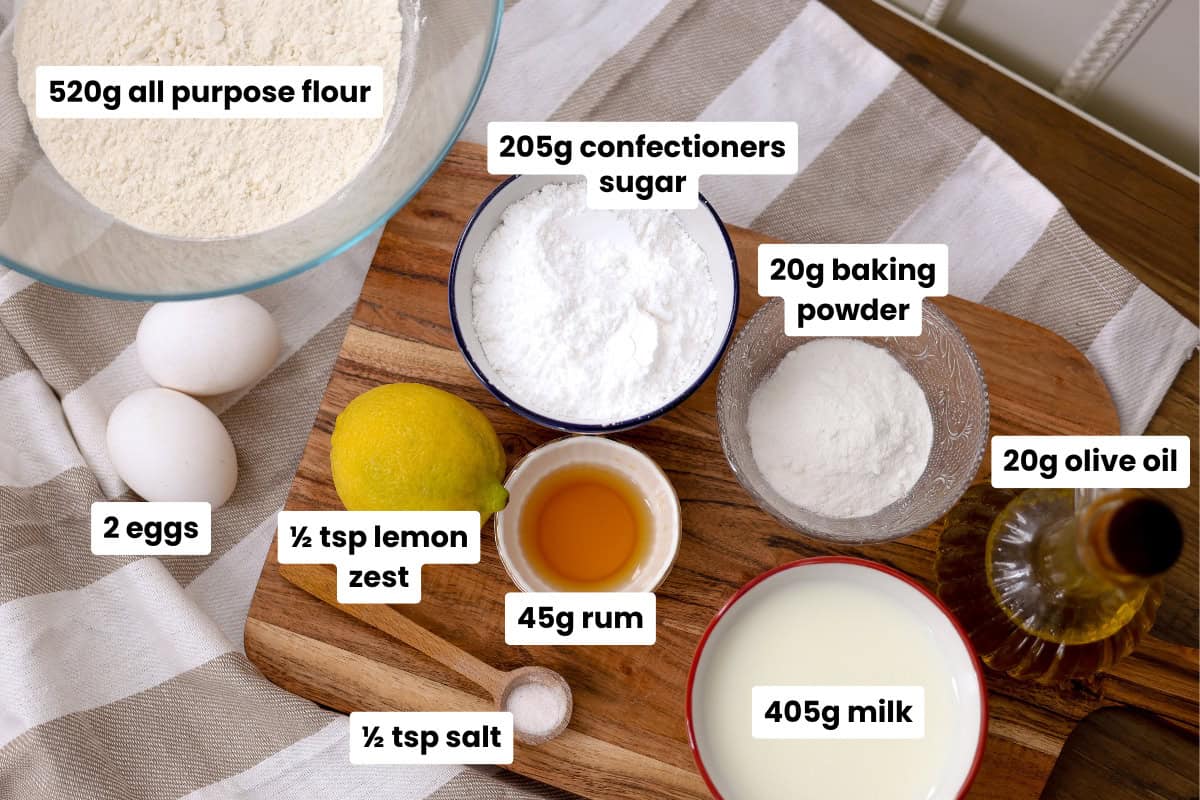
- All-purpose flour - provides structure without making the crumb dense
- Confectioners' sugar - dissolves more smoothly than granulated sugar, keeping the cake batter lump-free and the crumb tender
- Baking powder - lifts a dense batter inside a fully closed mold; make sure yours is fresh
- Olive oil - keeps the cake moist for days; pairs beautifully with rum and lemon zest
- Whole milk - adds moisture and helps activate the baking powder
- Eggs - bind the batter and add structure so the lamb holds its shape when unmolded
- Rum - not optional; it adds warmth and depth. Use real rum, not extract
- Lemon zest - brightens the flavor without making it taste citrusy; fresh only
- Salt - balances the sweetness and sharpens everything else
- Butter - used to grease the lamb mold to prevent sticking
This article may contain affiliate links, which means I make a small commission at no extra cost to you. As an Amazon Associate, I earn from qualifying purchases at no extra cost to you. You can read the full disclosure policy.

Introducing my new Book
Sourdough for Beginners
A step-by-step guide to sourdough success.
Learn the simple rhythm of baking sourdough at home, from starter to first loaf.
Grab your copy ⬇️
🥘 Choosing Your Lamb Cake Mold
In Czech kitchens, the beránek mold is a piece of heritage in itself - some families pass down ceramic molds that are fifty years old. If you're buying your first one, here's what to look for.
- 3D vs 2D. A true beránek is a standing, three-dimensional lamb - the mold is in two halves, so the batter bakes into the iconic shape. 2D molds (lamb-shaped flat pans) are easier to find but lose the profile that makes the beránek feel like Easter. If you want the traditional look, go 3D.
- Material. Ceramic is the classic Czech choice - traditional beránek molds are glazed or terracotta ceramic, which bakes evenly and releases the cake cleanly once well-seasoned with butter. Cast iron is the other heirloom option, especially for vintage molds passed down through families. Aluminum and silicone exist for convenience but neither browns the crust the way a ceramic mold does.
- Size. Most Czech beránek molds hold between 1500 and 1700g of batter. My mold holds exactly 1600g, which is why this recipe is scaled the way it is. If yours is smaller, reduce the batter proportionally; if larger, scale up. The easiest way to measure your mold: fill it with water, weigh the water, 1 mL = 1 g.
🍲 No Mold? No Problem
You can still make a beautiful Easter lamb cake recipe without the traditional mold:
- Loaf pan. Bake the batter in a standard 9×5 loaf pan at the same temperature. Once cooled, dust with confectioners sugar and decorate the top with almond-sliver ears and a raisin eye - a simple "lamb loaf" that still reads as Easter.
- Bundt pan. A small bundt creates a crown shape that works well as an Easter table centerpiece.
- Hand-shaped. Chill the batter slightly, pipe it onto a parchment-lined tray in a lamb silhouette, and bake until golden.
🔪 Instructions to make Lamb Cake Recipe
- Preheat your oven to 180°C. Make sure it's fully up to temperature before the batter goes in.
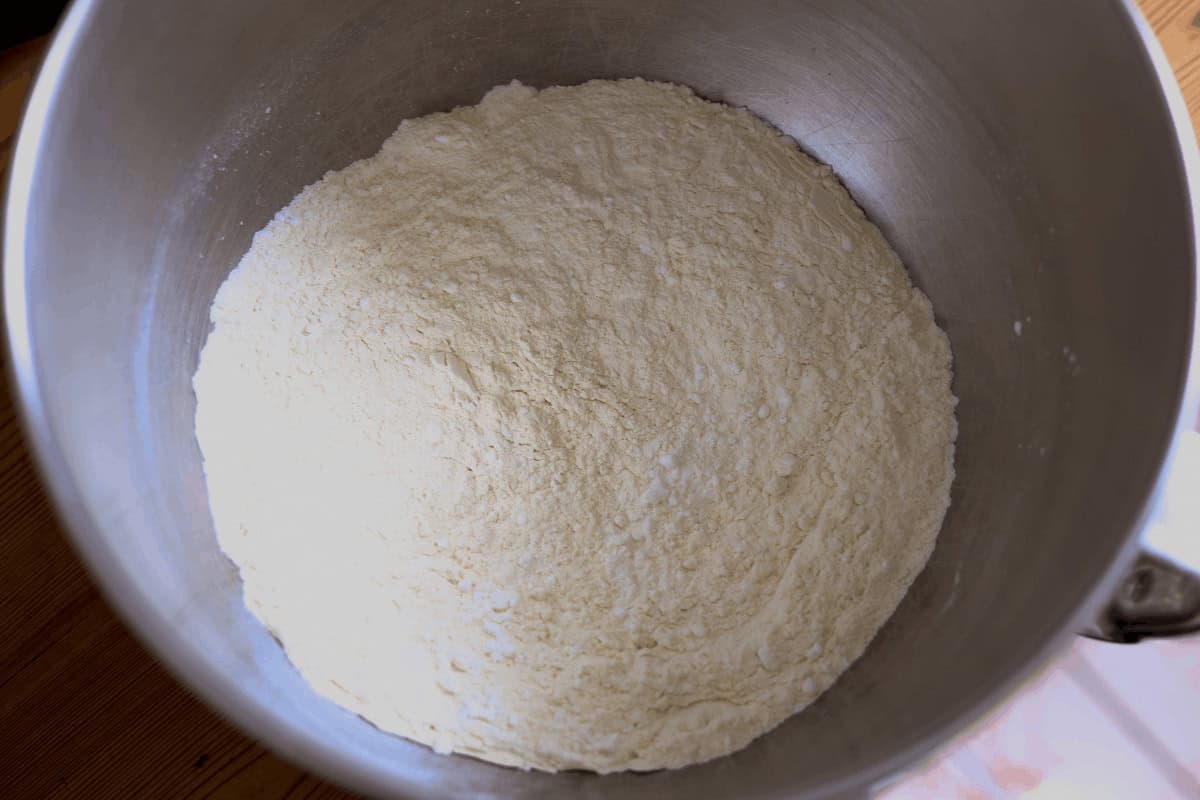
- Mix the dry ingredients. Combine the flour, confectioners' sugar, baking powder, lemon zest, and salt in a large bowl and whisk until evenly distributed.
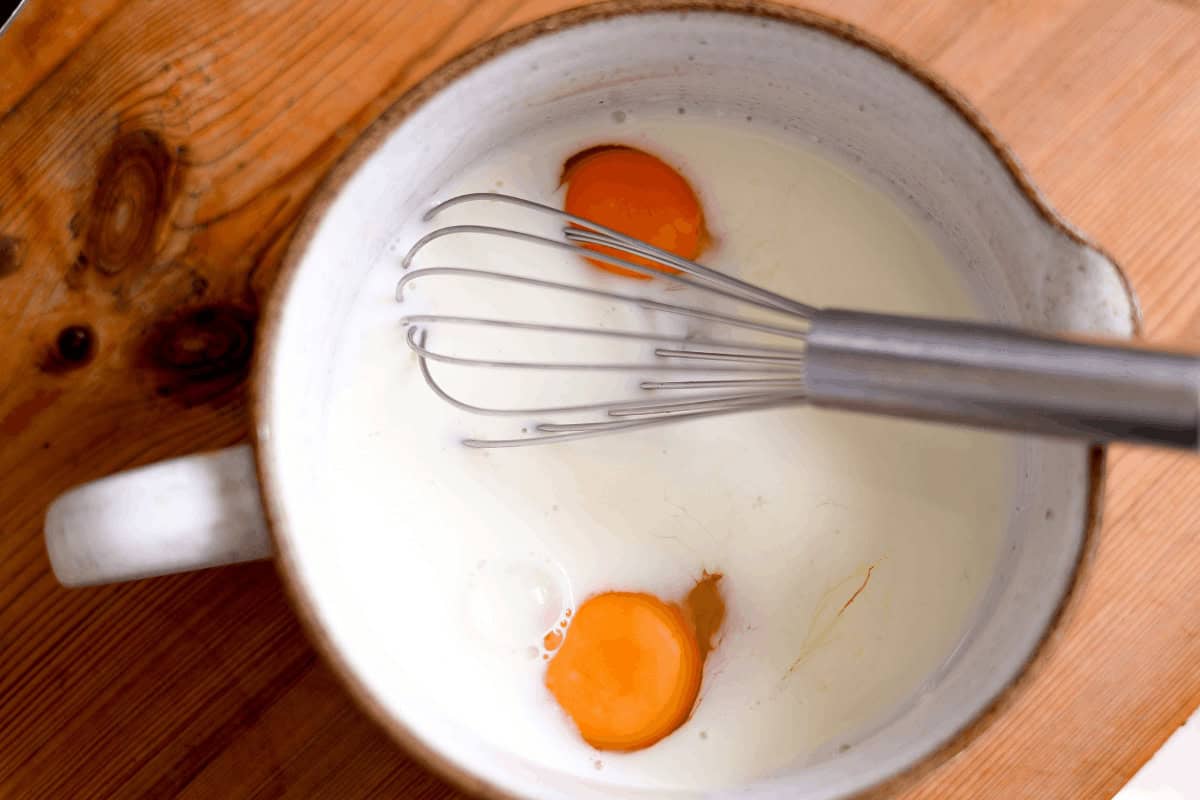
- Whisk the eggs and milk. Beat together with an electric mixer on medium speed or a hand whisk until smooth and slightly frothy.
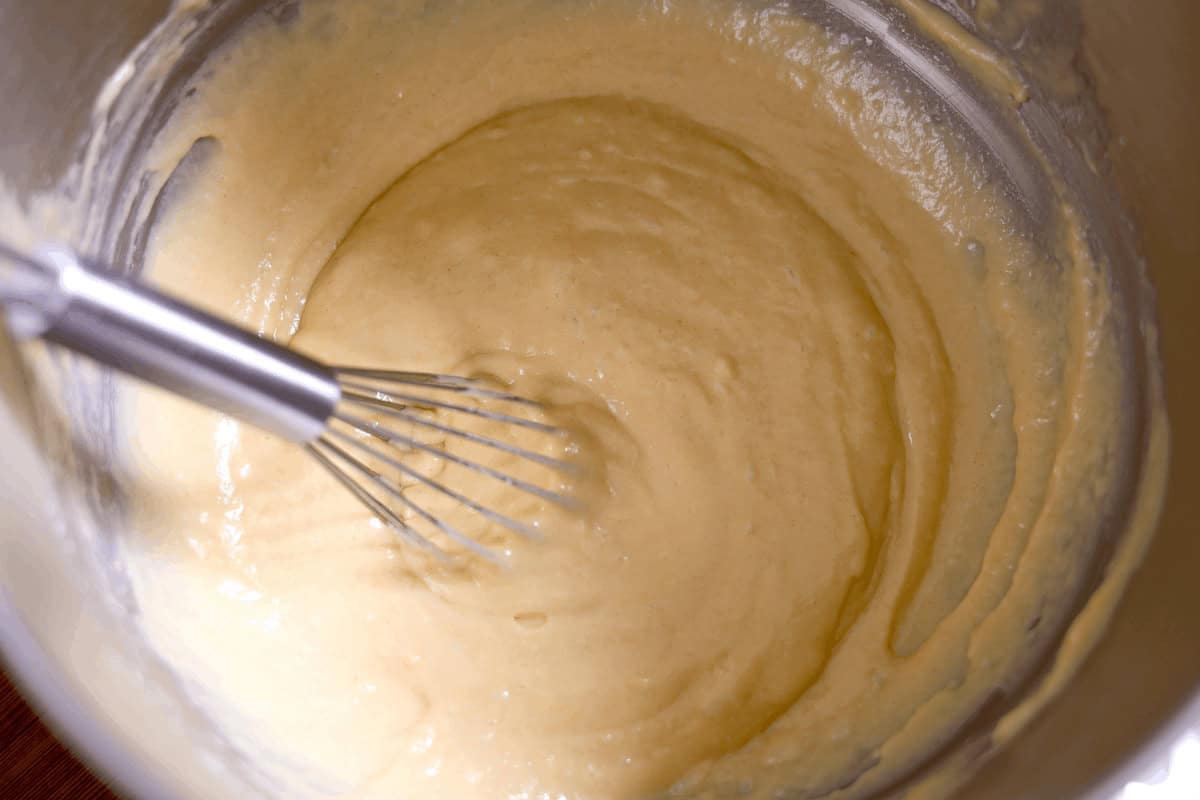
- Add the dry ingredients to the wet, pour in the olive oil and rum, and mix on low speed until the batter is smooth. Stop as soon as everything is combined - overmixing makes the cake dense.
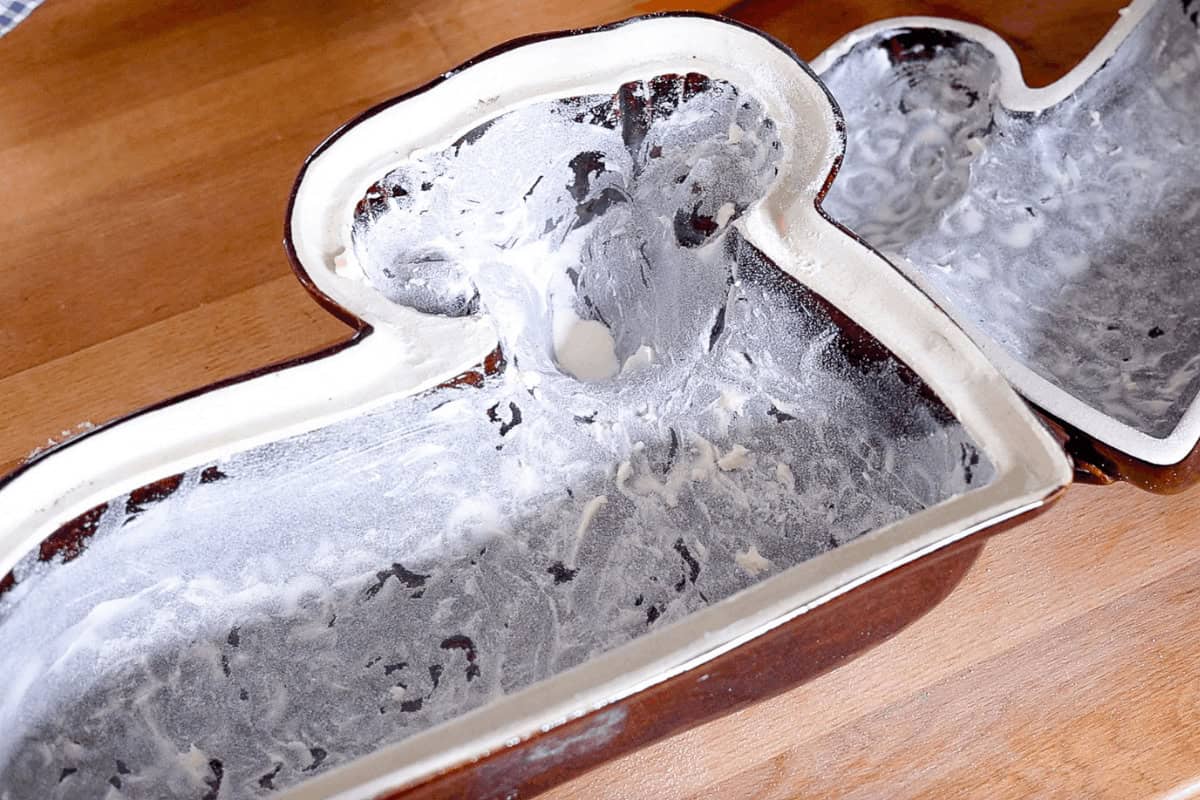
- Prepare the lamb cake pan. Grease both halves of the lamb mold thoroughly with cold butter, working it into every crevice of the lamb's face, ears, legs, and neck. Dust all surfaces with a thin layer of flour, shaking the prepared pan to coat evenly, then tap out the excess. You can substitute breadcrumbs for the flour, if you're worried your cake will stick to the mold.
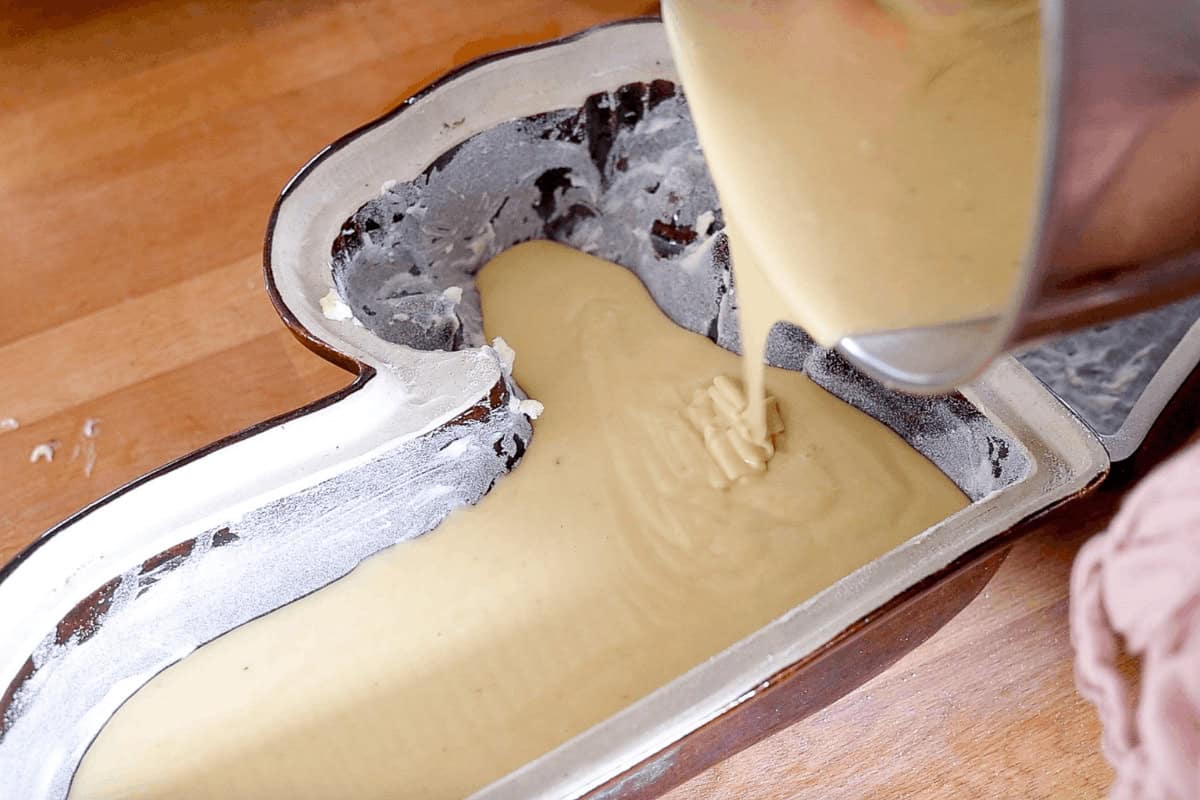
- Fill the mold completely with cake batter. Place it in your preheated oven on a cookie sheet or baking sheet - this stabilizes the mold and catches any extra batter that escapes through the vent hole.
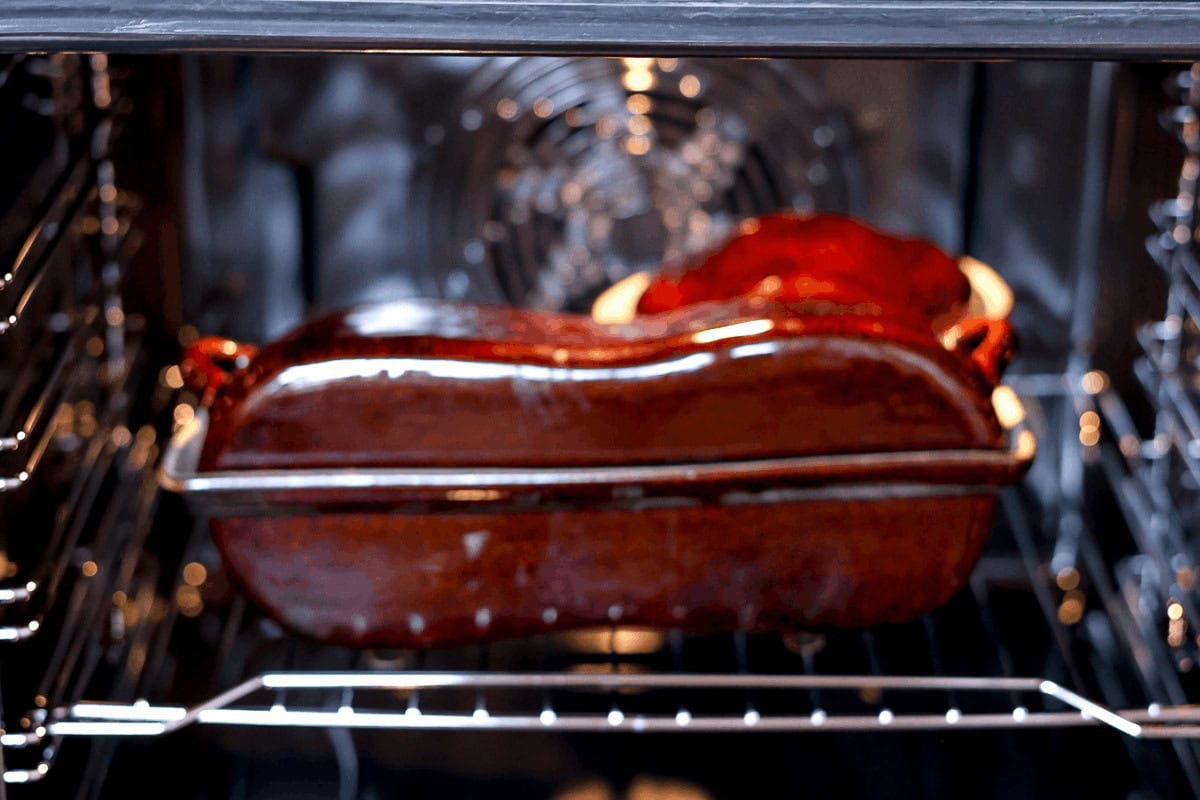
- Bake for 60-70 minutes. Check at 60 minutes by inserting a wooden skewer into the thickest part. If it comes out clean or with just a few moist crumbs, you're done.
- Set the mold on a wire rack and let cake cool for 10-15 minutes. The cake needs to still be slightly warm when you unmold it - not hot, not cold. Gently open and lift off the top mold. Then turn the bottom half upside down for the cake to slide out. If it resists, tap lightly on the counter.
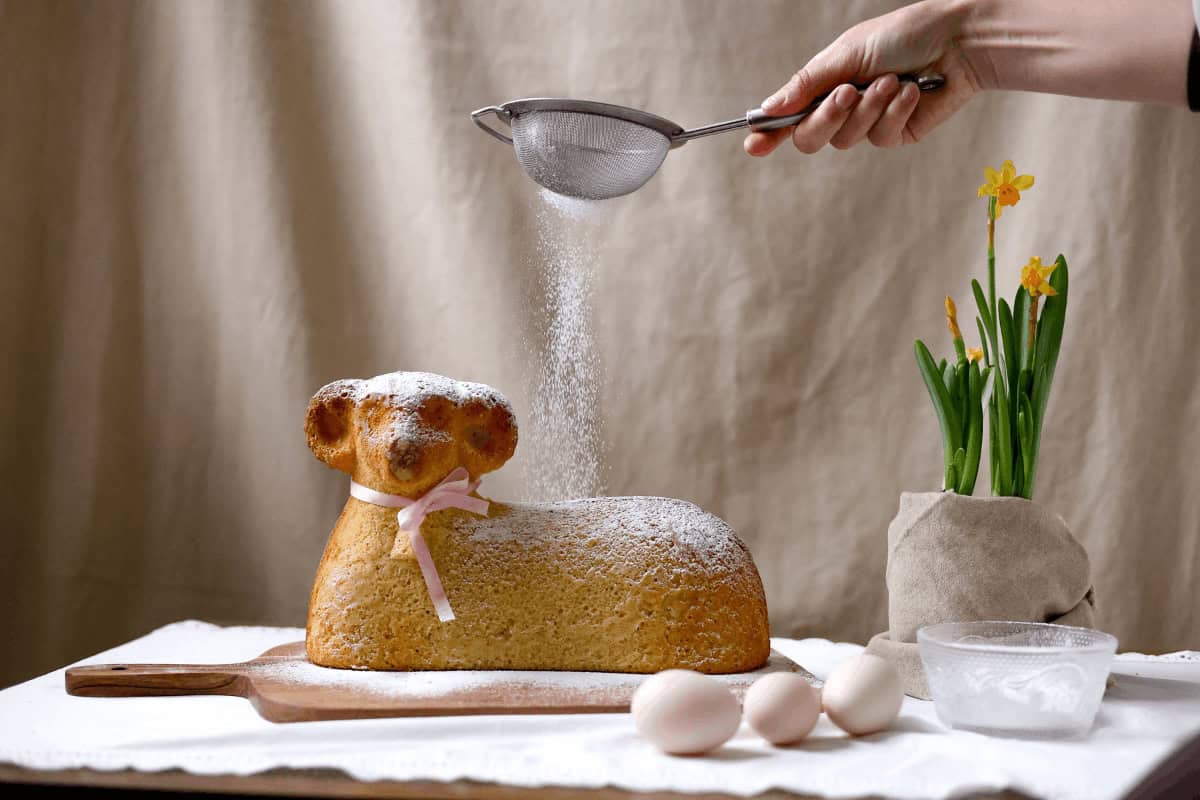
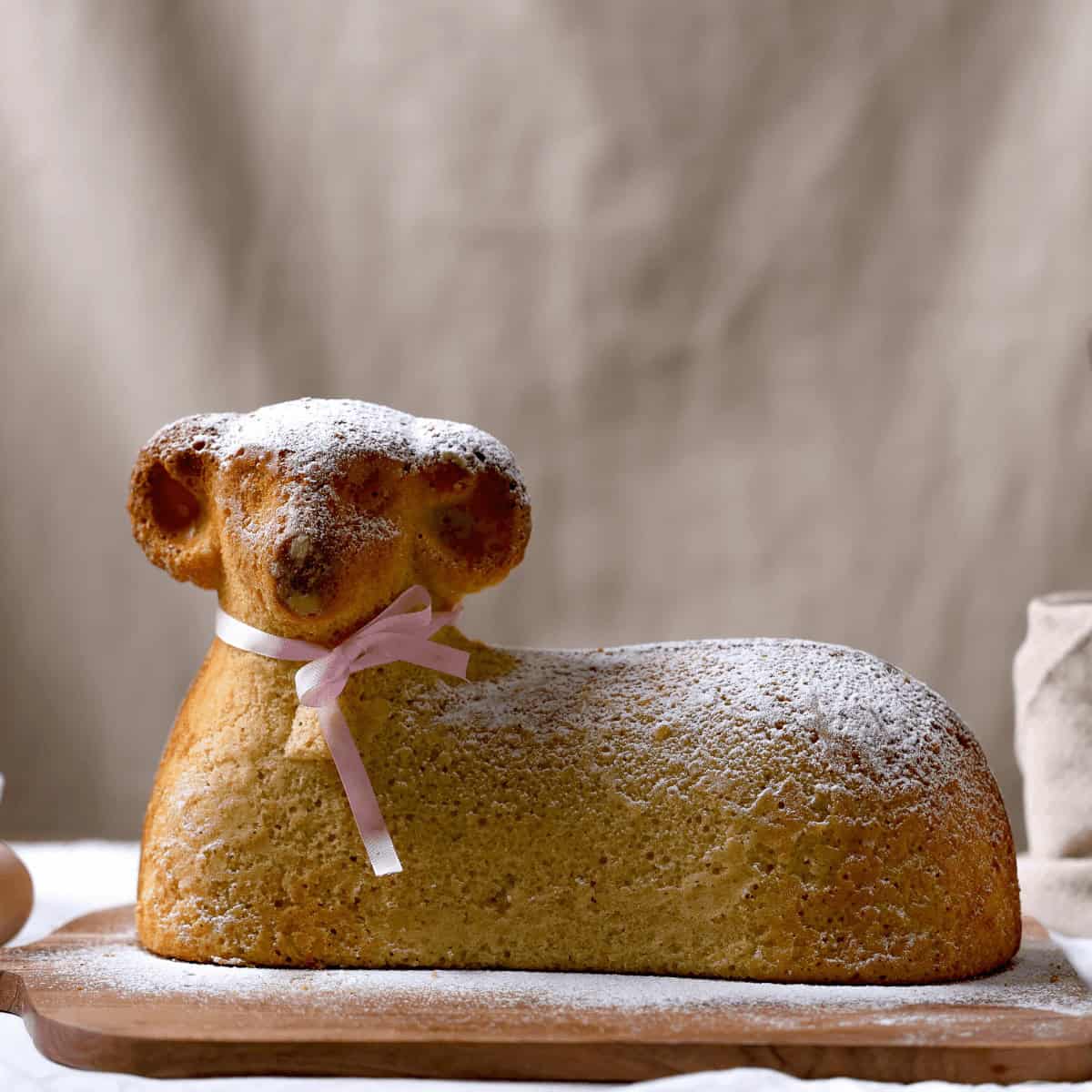
- Let the lamb cool fully on a wire rack before transferring to a serving platter. Dust generously with powdered sugar for the classic white cake look. For a traditional touch, tie a thin ribbon around the lamb's neck - it hides the seam line beautifully.
🥄 Substitutions
- Olive oil - vegetable oil works, or melted and cooled coconut oil.
- Whole milk - oat milk or almond milk both work for a dairy-free version. Buttermilk works as a 1:1 swap for whole milk and is the more traditional Czech choice; the cake will be slightly denser and tangier.
- Rum - replace with 2 tablespoons of fresh orange juice plus ½ teaspoon vanilla extract.
- Lemon zest - orange zest works well for a slightly sweeter, more floral flavor.
- All-purpose flour - a 1:1 gluten-free flour blend with xanthan gum; handle the unmolded cake gently as it will be slightly more delicate.
👩🏻🍳 Czech Bakery Variations
Once you've mastered the classic beránek, these three variations are all traditional in Czech bakeries - no inventing modern fusion, just riffs your grandmother might recognize.
- Chocolate Beránek (Čokoládový beránek). Replace ¼ cup of flour with unsweetened cocoa powder and add 2 tablespoons of hot water to loosen the batter. Dust with confectioners sugar once cooled, or drizzle with chocolate ganache for a bakery-style finish.
- Marble Beránek (Mramorový beránek). Divide the batter in half, stir 2 tablespoons of cocoa into one half, and swirl the two batters in the mold with a skewer before baking. When you unmold, you get a two-tone spiral inside - beautiful when sliced on the Easter table.
- Chocolate-Dipped Beránek (Polomáčený beránek). Bake the classic beránek, let it cool completely, then dip or drizzle the entire lamb in melted dark chocolate. A more modern take that Czech bakeries often sell alongside the traditional version.
🥣 Storage
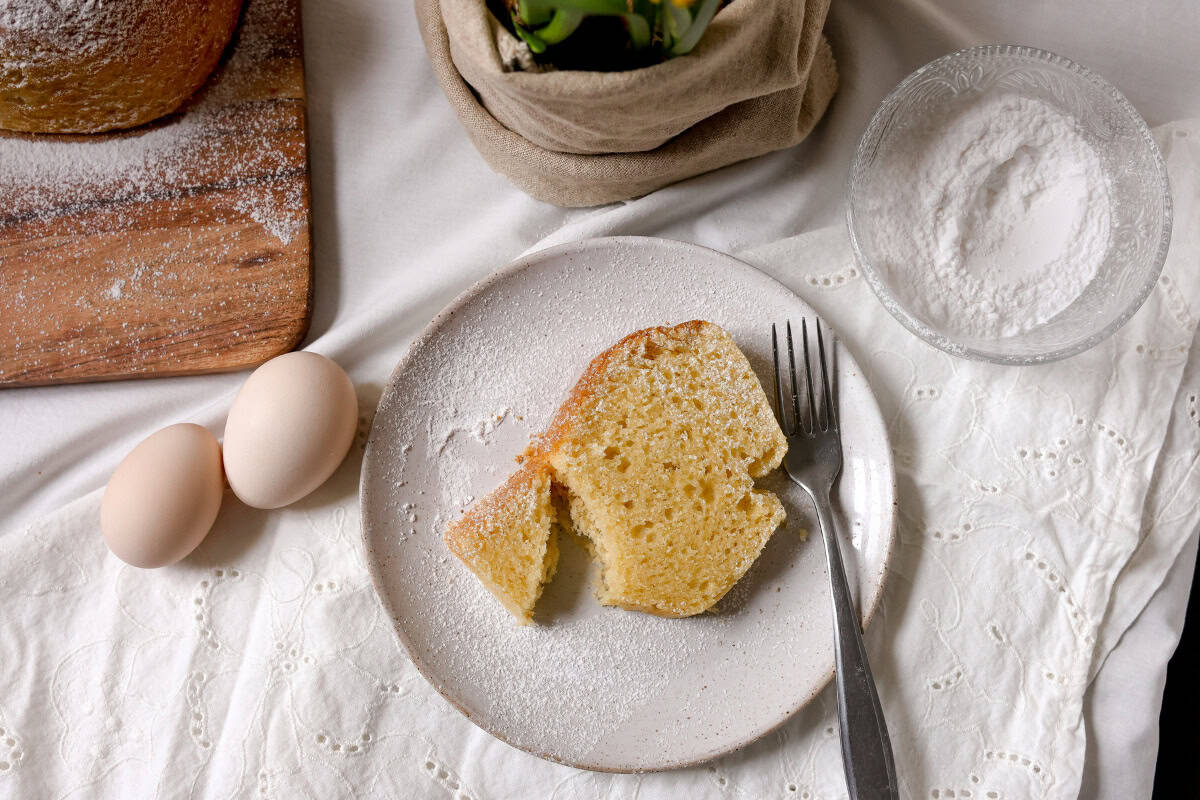
Store the unfrosted lamb at room temperature in an airtight container for 4-5 days. The olive oil keeps the crumb moist, and the flavor improves after the first day. Avoid the refrigerator - it dries this cake out quickly.
If decorated with cream cheese frosting or buttercream frosting, refrigerate and bring back to room temperature 30 minutes before serving.
- To freeze: wrap the unfrosted cake tightly in plastic wrap, then aluminum foil, and freeze for up to 2 months. Thaw overnight in the refrigerator, then bring to room temperature before decorating.
- Make ahead: Bake 1-2 days before Easter Sunday, store unfrosted at room temperature, and add powdered sugar just before it goes on the Easter table.
💭Tereza's Top Tips
Know your mold. Ceramic and cast aluminum molds produce the sharpest features - the lamb's face and wool texture come out with real definition. Non-stick metal is more forgiving for first-timers but gives softer detail. Silicone releases easily but the lamb loses its shape - skip it if presentation matters to you.
The most important thing I've learned: match your batter volume to your specific lamb cake mold. Too little and the beránek is hollow; too much and it overflows the seam. Here's how - fill the mold with water, then weigh the water. That weight in grams is your target batter amount. My mold holds 1600g, which is exactly what this recipe is calibrated for. If yours is different, use an AI tool to scale the recipe: "Scale this lamb cake recipe from 1600g of batter to Xg, adjusting all ingredients proportionally." It takes 30 seconds.
Unmold warm, not cold. The 10-15 minute window after the mold comes out of the oven is your sweet spot. Most broken lambs happen because someone waited too long.
🧂FAQ
Beránek is a traditional Czech Easter cake baked in a two-piece lamb-shaped mold. It's a pound cake-style batter flavored with rum and lemon zest, finished with powdered sugar or frosting, and has been a centerpiece of the Czech Easter table since the 19th century.
Lemon zest is what separates a traditional Czech beránek from a generic sponge cake. It cuts through the richness of the eggs and butter, adds a subtle floral note that pairs beautifully with rum (another classic Czech bakery flavor), and gives the cake a clean, spring finish. Always use fresh zest - dried or bottled lemon is not the same.
Usually it's not enough butter or shortening in the crevices, skipping the thin layer of flour, or waiting too long to unmold. Grease both halves thoroughly and unmold while still slightly warm - 10 to 15 minutes out of the oven.
Yes - replace with 2 tablespoons of orange juice plus ½ teaspoon vanilla extract.
Yes. Bake up to 2 days before Easter, store unfrosted at room temperature, and dust with powdered sugar just before serving.
Insert wooden skewers through the vent hole at the bottom of the mold into the thickest part. Clean or just a few moist crumbs means it's done. You can also press the exposed cake surface - firm and springy means ready.
Mix powdered sugar with a tiny amount of milk to make a thick paste, reassemble the pieces, let set for 20 minutes, then decorate. Powdered sugar or white icing hides almost any repair.
Yes. Use a 1:1 gluten-free flour blend with xanthan gum, rest the full 15 minutes before unmolding, and handle gently.
Tried this Lamb Cake recipe? Scroll down to the recipe card and leave a star rating - it takes two seconds and helps other bakers find this recipe.
Related
Looking for other recipes like this? Try these:


Pairing
These are my favorite dishes to serve with Easter Lamb Cake:

📖 Recipe
How to Make Easter Lamb Cake {Easy Czech Recipe}
Ingredients
- 520 g all purpose flour
- 205 g confectioners sugar
- 20 g baking powder
- ½ teaspoon salt
- ½ teaspoon lemon zest
- 405 g whole milk
- 205 g olive oil
- 4 large eggs
- 45 g rum
Instructions
- Preheat your oven to 180°C. Make sure it's fully up to temperature before the batter goes in.
- Mix the dry ingredients. Combine the flour, confectioners' sugar, baking powder, lemon zest, and salt in a large bowl and whisk until evenly distributed.
- Whisk the eggs and milk. Beat together with an electric mixer on medium speed or a hand whisk until smooth and slightly frothy.
- Combine and add rum. Add the dry ingredients to the wet, pour in the olive oil and rum, and mix on low speed until the batter is smooth. Stop as soon as everything is combined - overmixing makes the cake dense.
- Prepare the lamb cake pan. Grease both halves of the lamb mold thoroughly with cold butter, working it into every crevice of the lamb's face, ears, legs, and neck. Dust all surfaces with a thin layer of flour, shaking the prepared pan to coat evenly, then tap out the excess. You can substitute breadcrumbs for the flour, if you're worried your cake will stick to the mold.
- Fill the mold. Fill the mold completely with cake batter. Place it in your preheated oven on a cookie sheet or baking sheet - this stabilizes the mold and catches any extra batter that escapes through the vent hole.
- Bake for 60-70 minutes. Check at 60 minutes by inserting a wooden skewer into the thickest part. If it comes out clean or with just a few moist crumbs, you're done.
- Rest 10-15 minutes, then unmold warm. Set the mold on a wire rack and let cake cool for 10-15 minutes. The cake needs to still be slightly warm when you unmold it - not hot, not cold. Gently open and lift off the top mold. Then turn the bottom half upside down for the cake to slide out. If it resists, tap lightly on the counter.
- Cool completely, then decorate. Let the lamb cool fully on a wire rack before transferring to a serving platter. Dust generously with powdered sugar for the classic white cake look. For a traditional touch, tie a thin ribbon around the lamb's neck - it hides the seam line beautifully.


This lamb cake was a huge hit! So moist and delicious, and it looked adorable. Definitely making it a new Easter tradition. Thanks!