

Can You Milk a Highland Cow? Fun Facts & Complete Guide
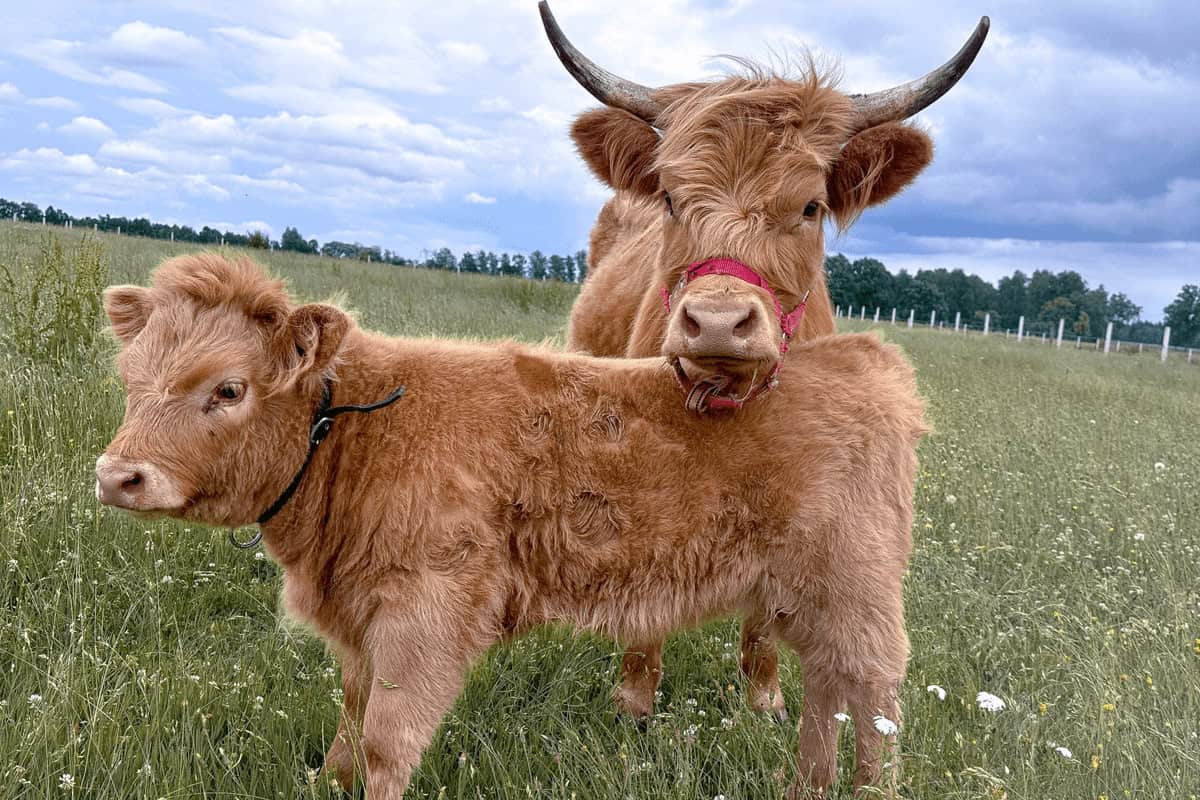
A few weeks after bringing our fluffy cow home, the question I kept getting was: can you milk a highland cow? The short answer is yes - and the longer answer is that with the right routine and a bit of patience, it's one of the most rewarding parts of keeping a family milk cow. Here's everything I've learned milking our 75% Highland, 25% Jersey girl twice a day.
Jump to:
🌾 TL;DR
- Highland cattle produce rich, high-butterfat A2 milk - 2-3 liters per day with calf sharing, up to 7 liters after weaning.
- They're a dual-purpose breed: excellent for both beef and dairy on small farms.
- Calf sharing (12-hour overnight separation) lets the calf keep nursing while you collect morning milk - and gives you the flexibility to skip a day.
- Highland cattle are one of the oldest registered cattle breeds in the world, with roots in 6th century Scotland.
🐮 Why I Love Highland Cows
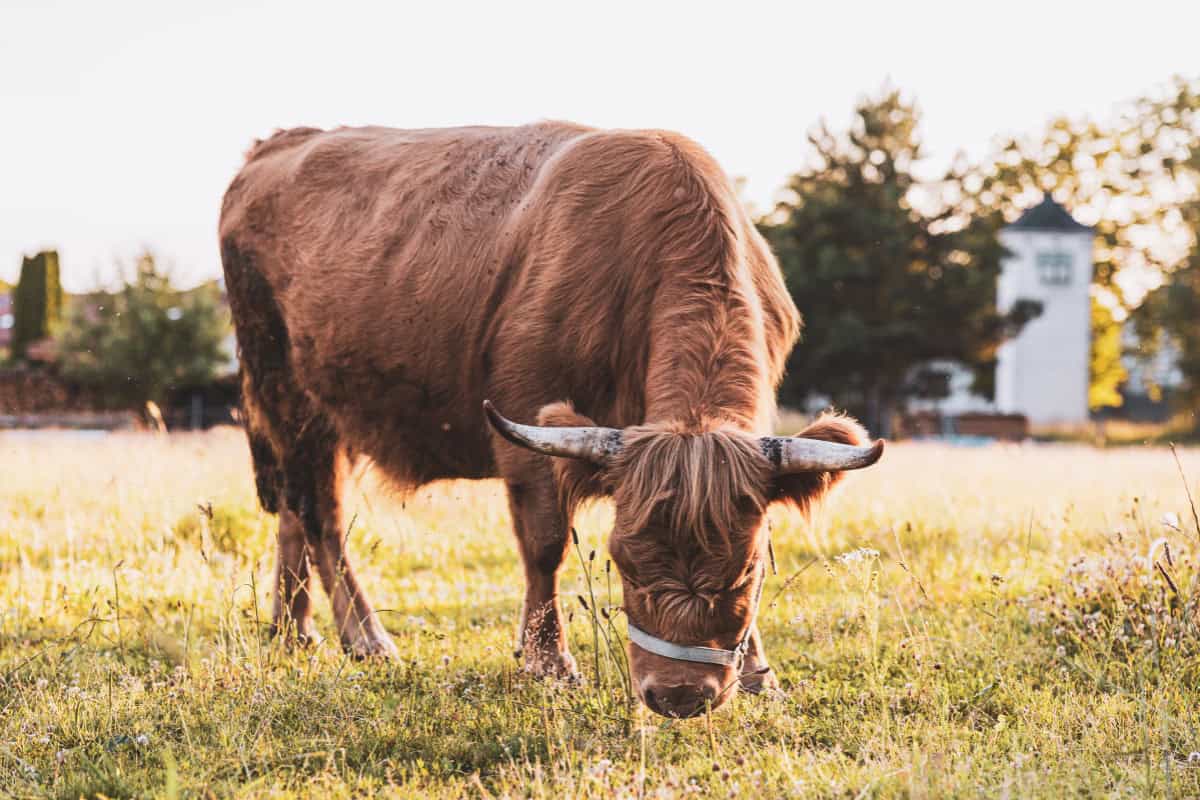
Our girl is exactly what I was looking for in a family milk cow. She's a hardy breed built for harsh conditions and cold climates - the harsh climate of Central Europe suits her perfectly. She gives us high quality rich milk in a manageable daily quantity, and for good reason - one of the good things about Highland cows today is the joy they bring.
What I love most is the small size. She doesn't need enormous pasture like larger breeds do, which makes her perfect for small farms like ours. She gives high butterfat A2 milk, and as one of the most naturally docile animals among beef breeds and dairy breeds alike, she's great with the whole family.
A fun fact: a group of highland cattle is called a fold, not a herd - an interesting fact for such a unique breed.
If you're building out a homestead, my post on how to start homesteading with no land is the best place to start.
🍃 A Brief History of Scottish Highland Cattle: A Closer Look
The Scottish Highland cow - also called a Highland coo, heilan coo, hairy coo, or one of the highland coos seen across Scotland - is one of the oldest registered cattle breeds and the oldest cattle breed in the world by some accounts. This unique cattle breed and ancient breed originates from the rugged Highlands of Scotland and the Western Islands of Scotland, where Celtic peoples began breeding them as far back as the 6th century. In the olden days they were central to highland life.
Their main purpose was survival in harsh conditions: cold weather, poor pasture, rough terrain, and wooded areas. Members of the breed developed a distinctive double coat of hair - a downy undercoat and long outer guard hairs - along with iconic long horns (large horns on the bulls), long hair, and long fringe. These traits help them retain body heat and maintain body weight without much body fat through brutal Scottish winters.
Historically Highland cattle weren't only dairy animals. As beef cattle and beef cows for working farms, they were central to life in north Scotland - highland beef was a valued commodity. Cattle thieving was a real concern; Rob Roy MacGregor is closely tied to that era. Queen Victoria famously kept a fold of highland cattle at Balmoral Castle, cementing their national status.
The Scottish Highland Cattle Society established the first herd book in 1884, making Highlands one of the oldest registered cattle breeds with formal registration. Today this ancient breed is found across the globe - North America, South America, the United States, and beyond - valued for conservation grazing, premium beef, meat production, and rich milk. They're docile animals and great pets as much as farm animals - and in recent years miniature Highland cows have made them accessible to smaller homesteads.
🌼 Fun Facts About Highland Cows
- They eat plants most animals avoid - including poison ivy.
- They thrive on poor pasture where other breeds of cattle struggle.
- Mini highland cows and miniature highland cattle are popular on small homesteads - same breed of cow, smaller.
- A highland bull has the same long hair, horns, and double coat as the cows.
- Their milk has a high butterfat content - richer than most dairy breeds. Some describe the flavor as an acquired taste; we love it.
- The shaggy cattle near Loch Ness are almost certainly Highland cattle.
- Highlands have smaller teats than most dairy cows - keep that in mind for a milking machine.
- A 75% Highland and 25% Jersey cross combines highland hardiness with improved milk production from dairy breed genetics - that genetic variation gives a good chance of better yields.
🥛 How to Milk a Highland Cow
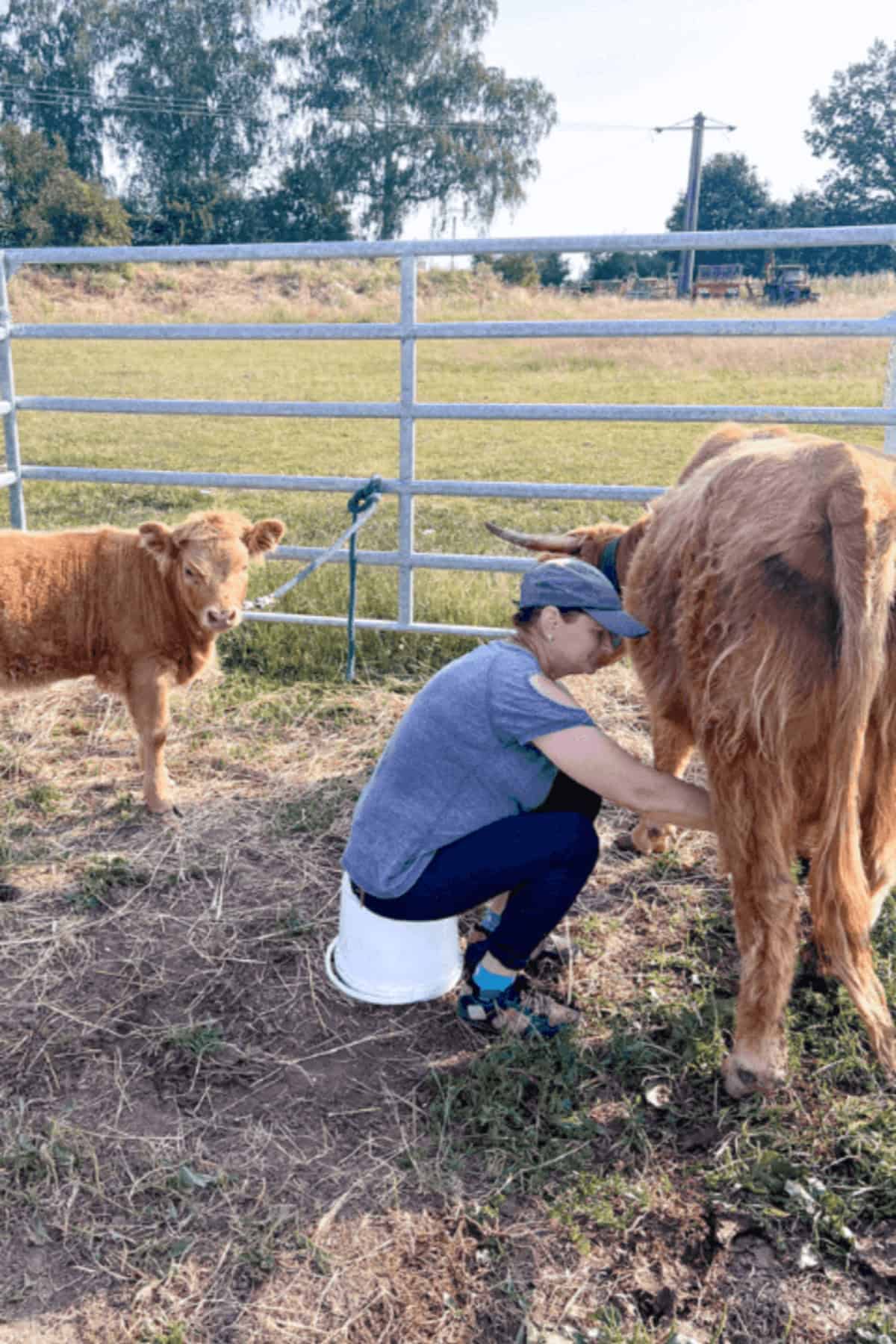
- Choose your spot. A field corner, paddock, or milking box. A sturdy fence corner limits movement until you build a box.
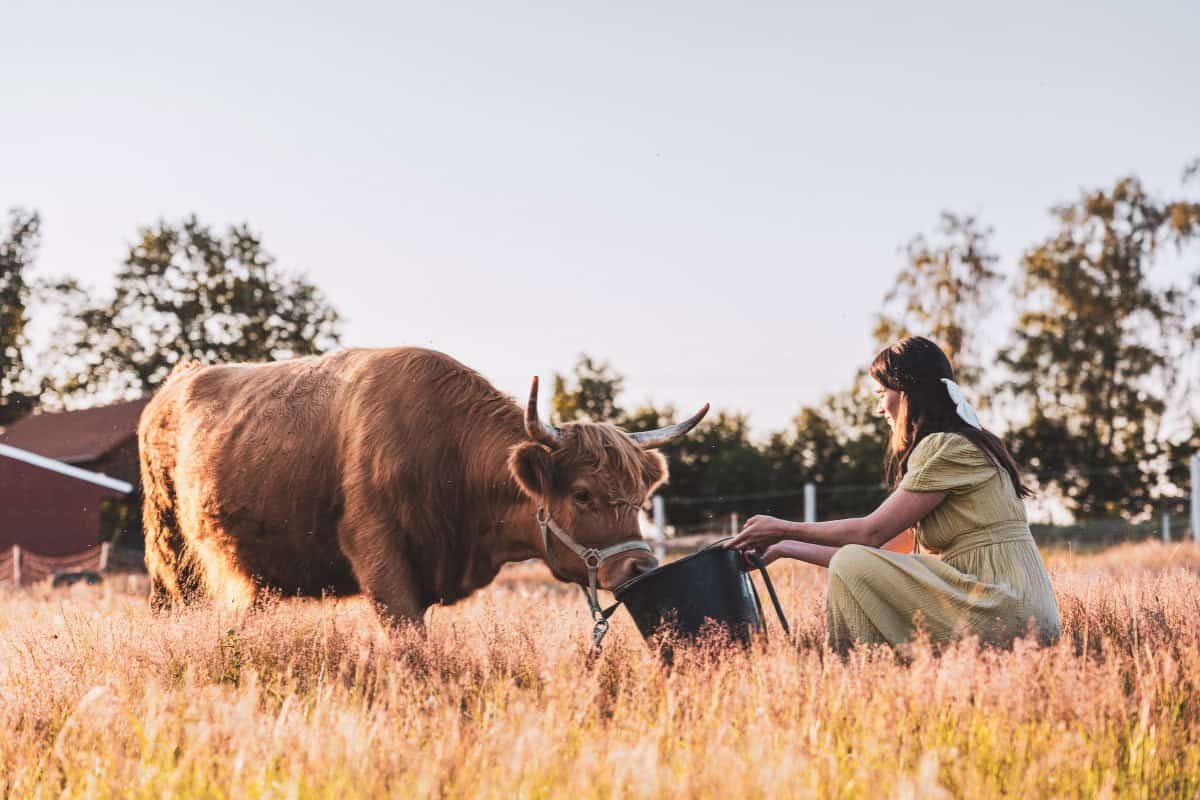
- Secure her and offer feed. Tie her to the fence or close her into the milking box. Offer cereal grains or hay - food keeps the session calm.
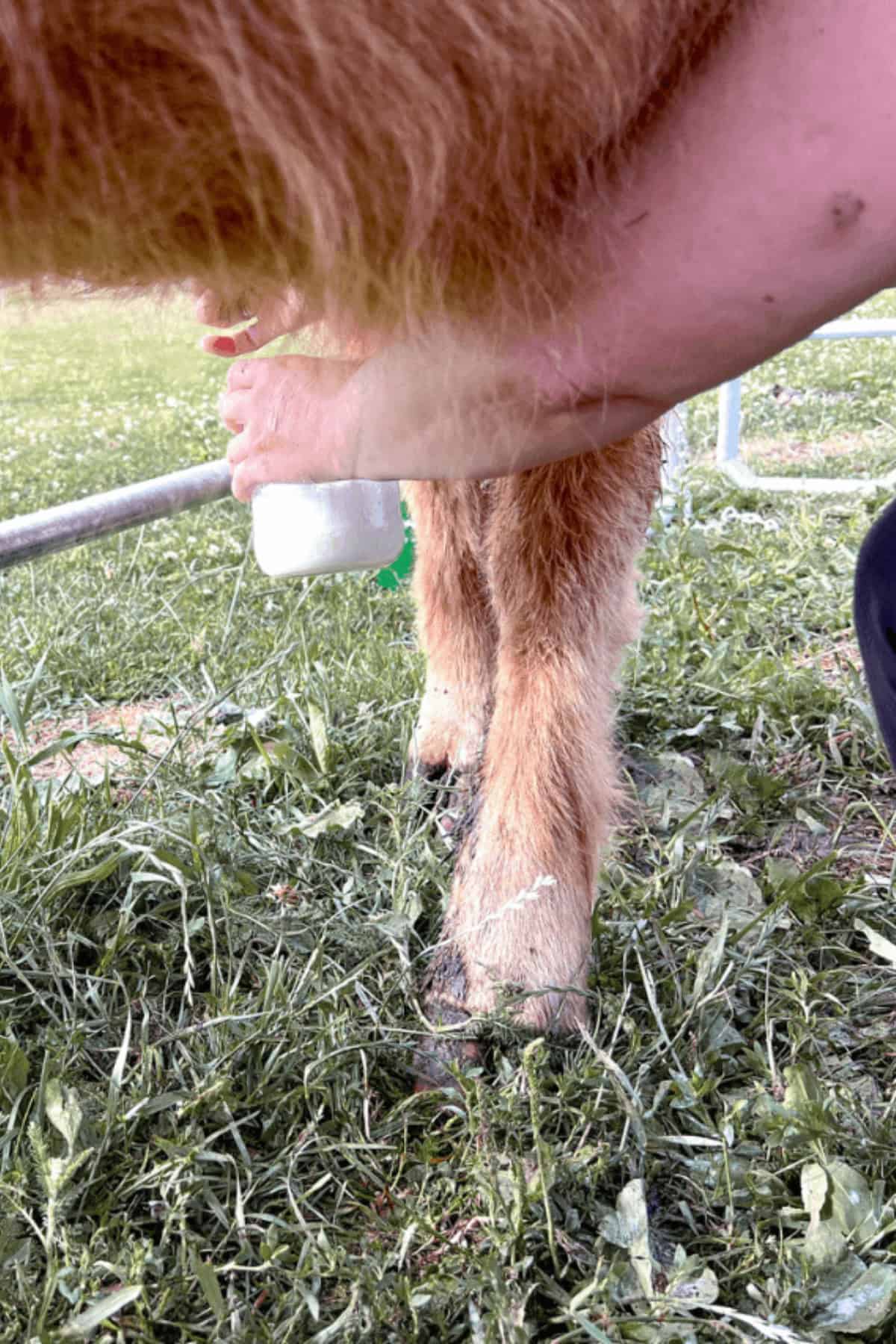
- Clean her teats. Warm damp rag first, then dry. Warm water stimulates let-down.
- Strip the first few squirts onto the ground. Clears the duct and flushes bacteria. Watch for clumps, discoloration, or blood - signs of mastitis.
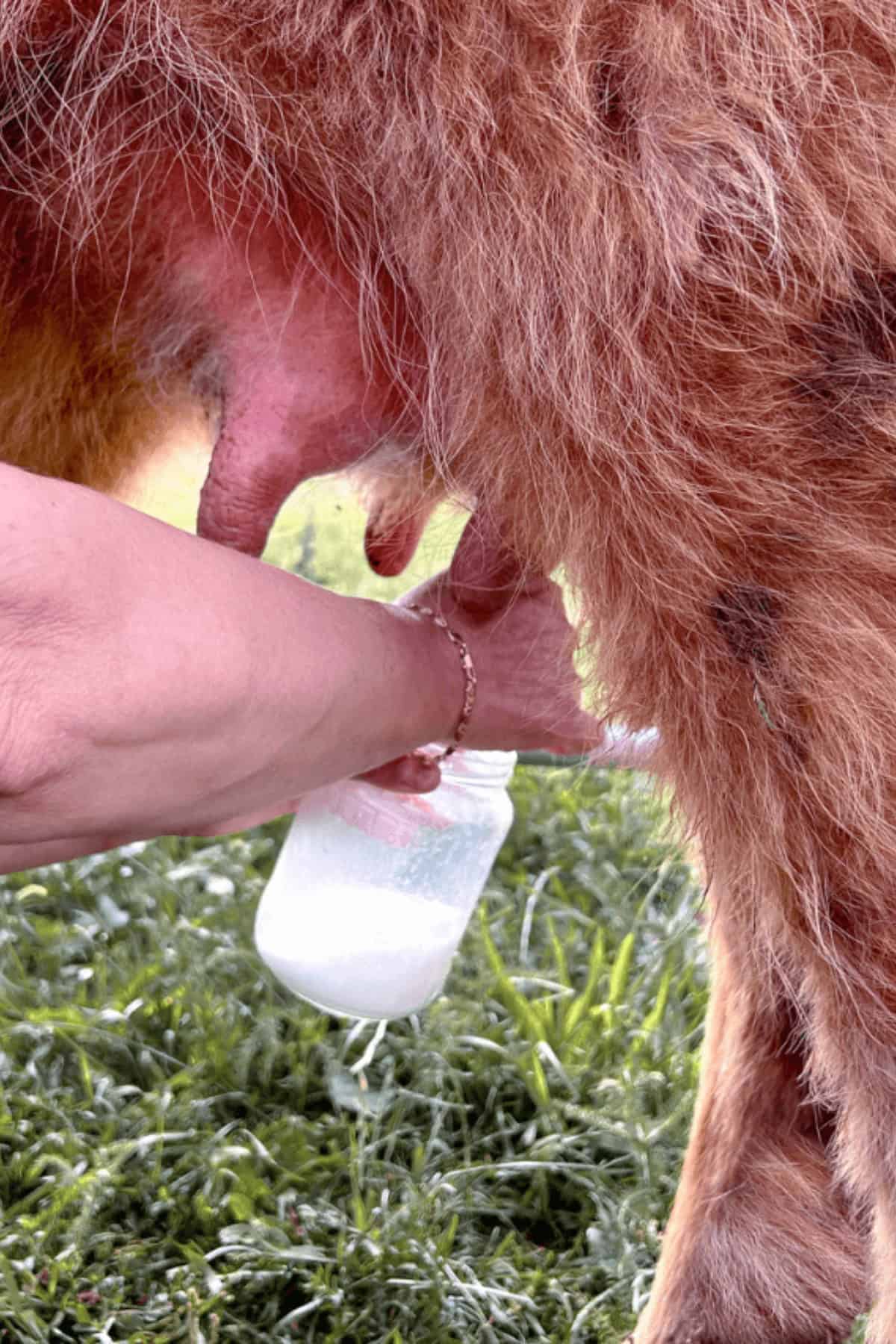
- Milk into the small jar, then transfer. Steady, firm squeeze base to tip. Dump the small jar into your larger container periodically.
- Empty all four quadrants. Each teat connects to its own section. If calf sharing, the calf finishes. If not, empty completely - leftover milk causes pressure, reduces future milk production, and raises infection risk.
- Praise her and release. A calm finish sets up a calm start next time.
- Repeat every 12 hours for full milking, or every 24 hours on a calf-sharing schedule.
🐄 Calf Sharing
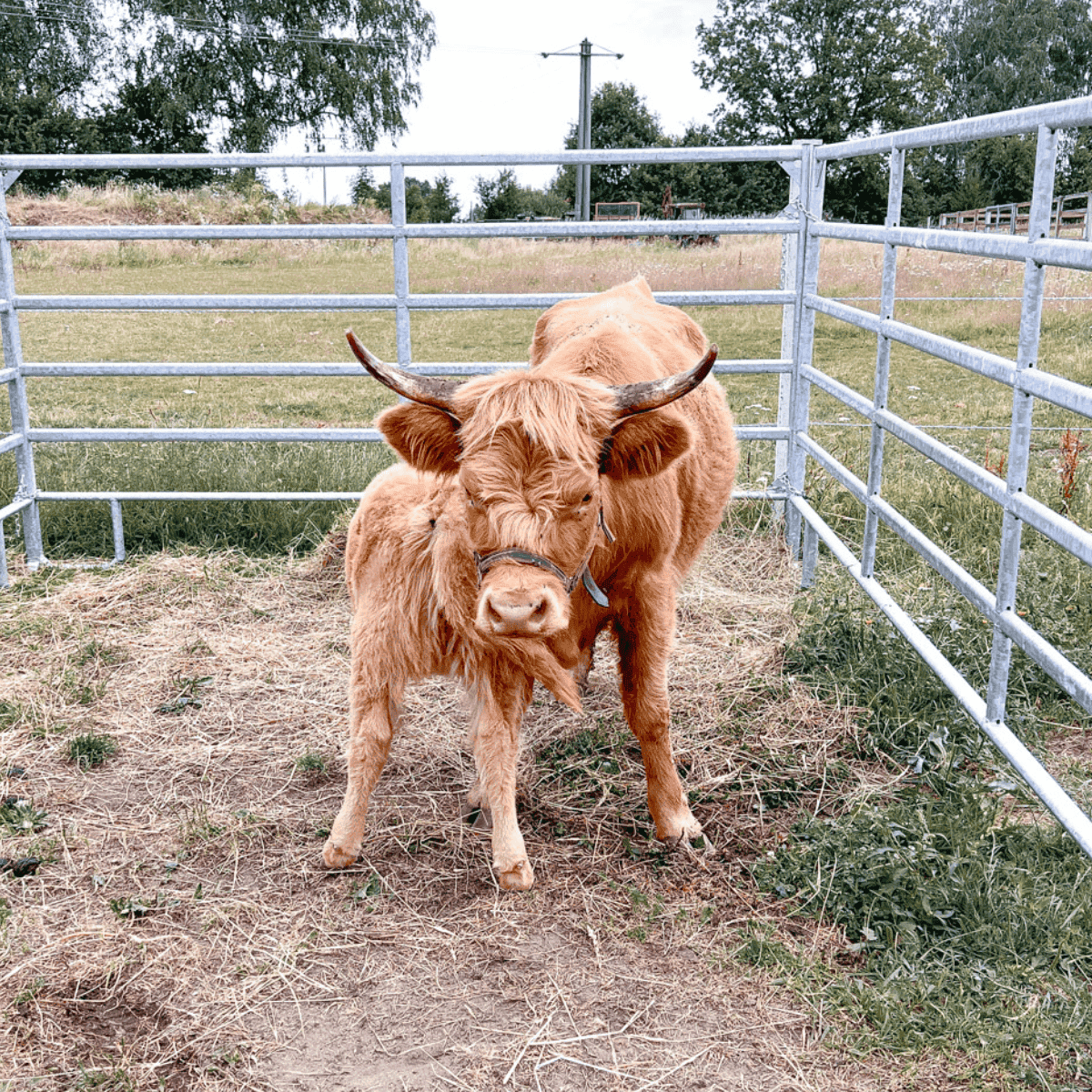
This is the method we use, and I'd recommend it to anyone getting started with highland milk. We separate our cow and calf overnight in a sturdy pen. In the morning, I milk first, then reunite them for the day. The calf nurses freely until evening, when we separate them again. The biggest advantage is flexibility - if I don't want to milk one morning, the calf finishes what's there. No waste, no udder pressure.
🌱 How Much Milk to Expect
Right now we get enough milk for our personal use - 2-3 liters per day while calf sharing. Once we wean the calf, that increases to around 7 liters per day. Highland cattle are not high-production dairy cows like you'd find on a dairy farm, and that's exactly the point. I'd rather have slightly less than waste gallons of milk every day.
With subsequent calves, highland milk yields typically increase as the cow matures. We're not running a dairy farm operation, just supplying our household with rich milk for personal use - and the smaller size setup suits us perfectly.
💭 Tereza's Top Tips
The single most important thing that will improve your milking sessions: consistency. Same spot, same time, same routine. A cow who knows what's coming is a calm cow.
🥣 Storage
Raw milk goes into clean glass jars and straight into the fridge as soon as milking is done. Keeps well 7-10 days chilled. We use ours for drinking, butter, and fermenting.
Raw milk doesn't freeze well for drinking (it separates), but it freezes fine for cooking or for fermenting after thawing.
🧂FAQ
Highland cows follow the same lactation cycle as all dairy cows - they produce milk after calving and typically lactate 10-12 months, then need to calve again.
10-15 minutes with a calm, trained cow. Expect 30-45 minutes including setup while you're both learning.
12-18 months, before her first calf. Early training means haltering, leading, and touching her udder.
Keep the calf close by. A fence corner limits movement; a milking box solves most of the problem.
Yes. A lactating cow has higher nutritional demands. We offer cereal grains at milking time for the extra calories and protein needed for milk production.
Look for reputable highland breeders in your region - many keep waiting lists.
More From the Homestead



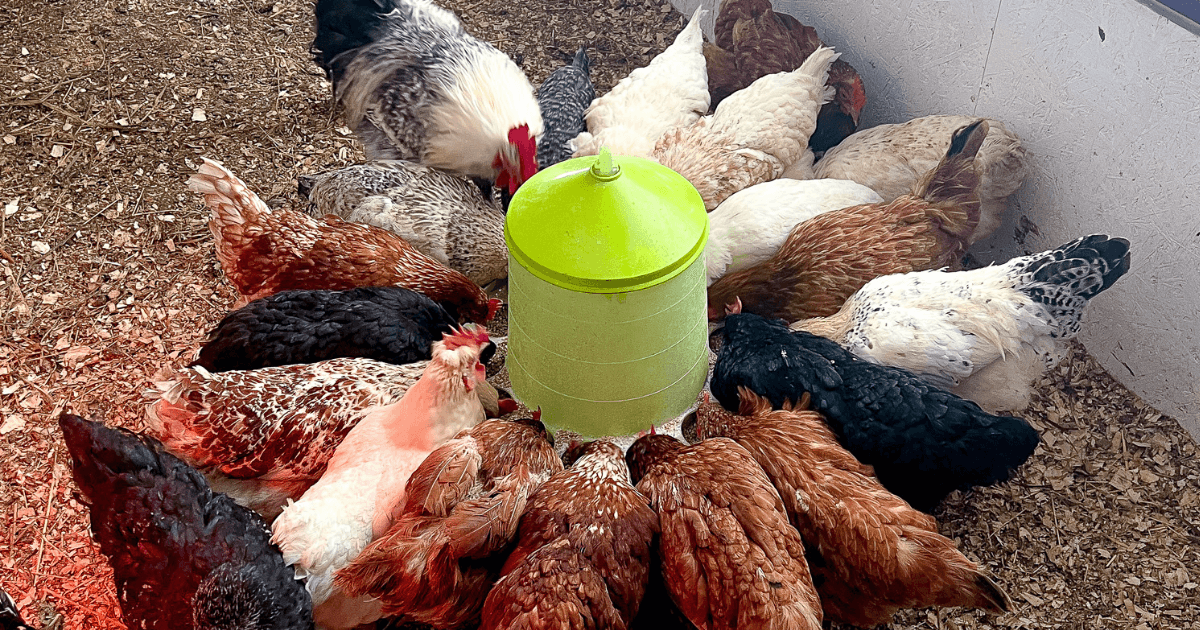
If you're getting started with backyard animals, my backyard chicken feeding guide is a great companion read - many of the same principles around routine and daily care apply across the whole farm.
Have questions about milking Highland cattle, or thinking about getting your own highland coo? Drop them in the comments.

Comments
No Comments