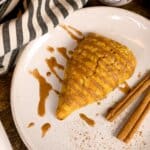
Sourdough Pumpkin Scones with Maple Glaze Recipe
These sourdough pumpkin scones are tender, full of fall flavor, and topped with a sweet maple glaze—perfect for a cozy treat any time of year!
Servings 8
Calories 360kcal
Equipment
Ingredients
For the scones
- 113.5 g Butter
- 300 g All-purpose flour
- 110 g Brown sugar
- 10 g Baking powder
- 1 ½ teaspoon Pumpkin pie spice
- 1 teaspoon Cinnamon
- 3 g Salt
- 1 Egg
- 120 g Pumpkin puree
- 120 g Sourdough starter discard or active
- 60 g Heavy cream
- 7.5 g Vanilla extract
Maple Glaze:
- 120 g Powdered sugar
- 2 g Pumpkin pie spice
- 1 g Cinnamon
- 30 g Maple syrup
- 15 g Milk depending on the consistency you want for the glaze
Instructions
- Cut the butter into cubes and pop it in the freezer while preparing the rest of the ingredients.113.5 g Butter
- In a large bowl, stir together the flour, brown sugar, baking powder, pumpkin pie spice, cinnamon, and salt.300 g All-purpose flour, 110 g Brown sugar, 10 g Baking powder, 1 ½ tsp Pumpkin pie spice, 1 tsp Cinnamon, 3 g Salt
- In a smaller bowl, whisk the egg with the pumpkin puree, sourdough starter, heavy cream, and vanilla.1 Egg, 120 g Pumpkin puree, 120 g Sourdough starter discard or active, 60 g Heavy cream, 7.5 g Vanilla extract, 15 g Milk
- Using a pastry blender, cut the frozen butter into the dry mixture until it resembles small pea-sized crumbs.
- Pour the wet ingredients into the dry. Start mixing with a spoon, then gently knead with your hands just until it forms a ball. Don’t overmix—it should look a little rough and shaggy.
- Place the dough on your work surface and shape it into a round disc about 1 inch (2.5 cm) thick. Cut into eight wedges using a knife.
- Preheat the oven to 400°F (200°C). While it heats, refrigerate the scones for 10–15 minutes. Line your baking sheet with parchment paper.
- When ready, place the chilled scones on the baking sheet, spaced apart. A bench scraper makes transferring easy.
- Bake for 20–25 minutes until golden. Let them cool on a wire rack.
- While cooling, whisk together all glaze ingredients in a small bowl.120 g Powdered sugar, 2 g Pumpkin pie spice, 30 g Maple syrup, 1 g Cinnamon
- Drizzle the glaze over the cooled scones.
Notes
- Keep ingredients cold – Cold butter, egg, and even pumpkin puree help create that signature flaky scone texture. For best results, you can also chill your mixing bowl and tools.
- Cut butter to coarse crumbs – When mixing butter into the flour, aim for a coarse, crumbly texture. These pockets of butter steam in the oven, creating light, fluffy layers.
- Handle dough gently – Don’t overmix or knead the dough too much. Mix just until it comes together to avoid tough scones.
- Chill before baking – If your kitchen is warm, chill the shaped scones for about 15 minutes before baking. This helps the butter stay solid and improves the rise.
- Cut evenly – Slice scones into equal portions so they bake at the same rate and come out evenly browned.
- Leave space between scones – Give them room to expand during baking. Proper spacing helps ensure even browning and air circulation.
- Check for doneness – Scones should be golden and feel firm to the touch. A toothpick inserted into the center should come out clean or with just a few moist crumbs.
- Adjust glaze consistency – If your glaze is too thick, add a bit of milk. Too thin? Stir in more powdered sugar.
- Let scones cool before glazing – Allow scones to cool slightly so the glaze doesn’t melt off, but glaze while still a bit warm if you want it to stick well.
Nutrition
Calories: 360kcal | Carbohydrates: 65g | Protein: 6g | Fat: 15g | Saturated Fat: 9g | Polyunsaturated Fat: 1g | Monounsaturated Fat: 4g | Trans Fat: 0.5g | Cholesterol: 60mg | Sodium: 386mg | Potassium: 126mg | Fiber: 2g | Sugar: 17g | Vitamin A: 2835IU | Vitamin C: 1mg | Calcium: 120mg | Iron: 2mg
