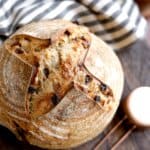
Cinnamon Raisin Sourdough Bread Recipe
This cinnamon raisin sourdough bread recipe makes a soft, flavorful loaf swirled with warm spice and sweetness, perfect for fall breakfasts or brunch.
Servings 6
Calories 632kcal
Equipment
- Proofing Box
Ingredients
- 100 g raisins
- 900 g flour
- 500 g water
- 3 teaspoon salt
- 200 g active sourdough starter
- 2 tablespoon cinnamon
Instructions
- Mix the Dough: Add all ingredients to the bowl of a stand mixer fitted with a dough hook. Knead on medium speed for 10–15 minutes, until the dough is soft, elastic, and stretches without tearing.100 g raisins, 900 g flour, 500 g water, 3 tsp salt, 200 g active sourdough starter, 2 tbsp cinnamon
- First Rise: Transfer the dough to a lightly oiled bowl and cover with plastic wrap or a damp towel. Let it rise in a warm spot (around 23°C / 73°F) for 5–7 hours, or until doubled in size.
- Shape the Loaves: Once doubled, turn the dough out onto a lightly floured surface. Divide into two portions. Working with one piece at a time, fold the edges inward, then gently tighten the surface by spinning the loaf toward you.
- Cold Proof: Place each loaf seam-side up in a floured banneton basket. Slip the basket into a large plastic bag, tie it off, and refrigerate overnight for a slow, cold proof.
- Preheat the Oven: The next day, place your Dutch oven inside the oven and preheat to 250°C (500°F) for 1 hour.
- Score and Bake: Turn one loaf out of its banneton onto parchment paper. Score the top with a lame, razor, or sharp knife. Using the parchment, carefully lift the loaf into the preheated Dutch oven. Bake covered for 20 minutes.
- Finish the Bake: Reduce the oven to 235°C (450°F), remove the lid, and bake uncovered for another 15–20 minutes, until golden brown.
- Cool: Remove the bread from the Dutch oven and let it cool completely on a wire rack before slicing.
Notes
Tips
- Use a mature starter: Make sure your sourdough starter is strong enough to raise bread. If you’ve just made your starter, give it time to mature before using.
- Hydrate the raisins: Soak them in warm water for 15–20 minutes before adding. This keeps them plump and prevents them from pulling moisture out of your dough.
- Adjust hydration as needed: If the dough feels too dry, add water a tablespoon at a time while mixing.
- Mind your proofing temperature: Aim for 70–75°F (21–24°C). Cooler temps mean slower fermentation, so adjust your rise time accordingly.
- Score lightly: A shallow slash or two is enough to control the loaf’s expansion without collapsing the dough.
Nutrition
Calories: 632kcal | Carbohydrates: 136g | Protein: 17g | Fat: 2g | Saturated Fat: 0.3g | Polyunsaturated Fat: 1g | Monounsaturated Fat: 0.1g | Sodium: 3501mg | Potassium: 310mg | Fiber: 7g | Sugar: 0.5g | Vitamin A: 8IU | Vitamin C: 1mg | Calcium: 59mg | Iron: 8mg
