Rosemary Olive Oil Sourdough Bread
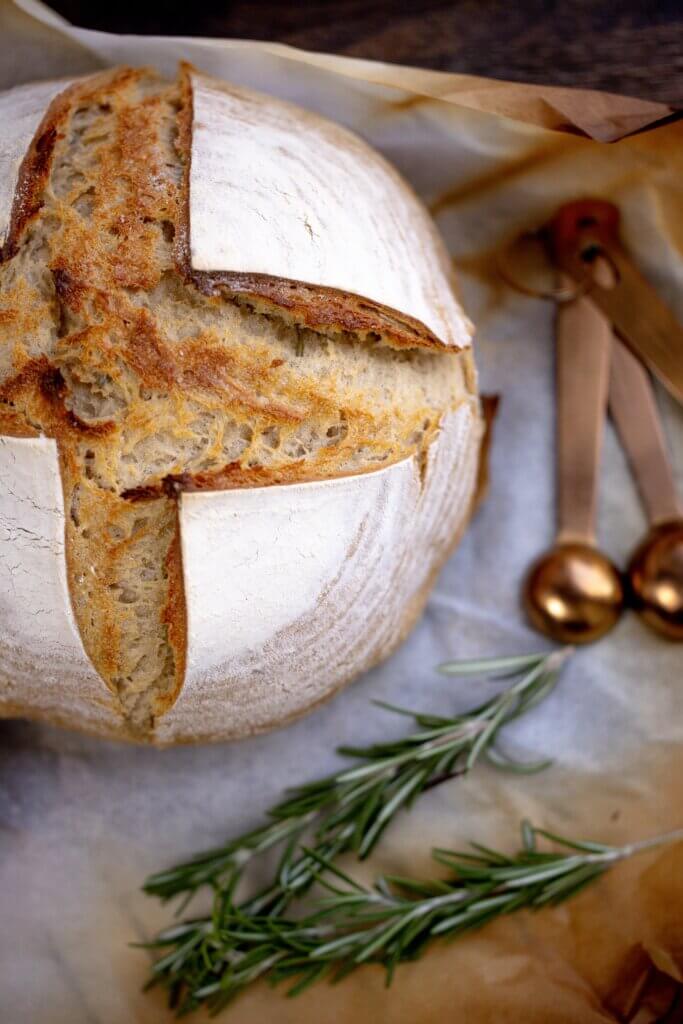
This rosemary sourdough bread is fragrant, flavorful, and baked with olive oil for the perfect Italian-inspired loaf to share with family or friends.
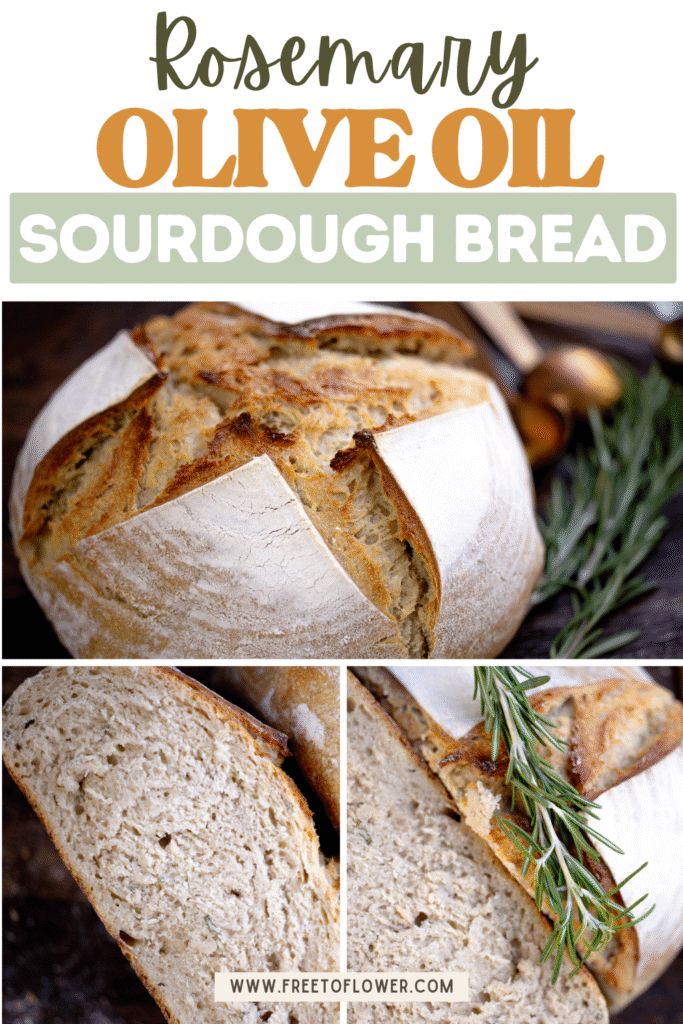
There’s something about rosemary and olive oil baked into bread that feels like comfort in its purest form. This rosemary sourdough bread has become one of my favorite twists on my classic sourdough recipe. I love baking it when friends are coming over, or when I want to share something special with my family after a long week. The fragrance of fresh rosemary and richness of olive oil give it that irresistible Italian flair—especially when paired with a hearty bowl of soup or a simple pasta dinner.
Why You’ll Love This Recipe
- Fragrant Italian Flavor – This rosemary sourdough bread is infused with fresh rosemary and a splash of extra virgin olive oil, giving every bite a rustic, earthy aroma that instantly transports you to an Italian kitchen.
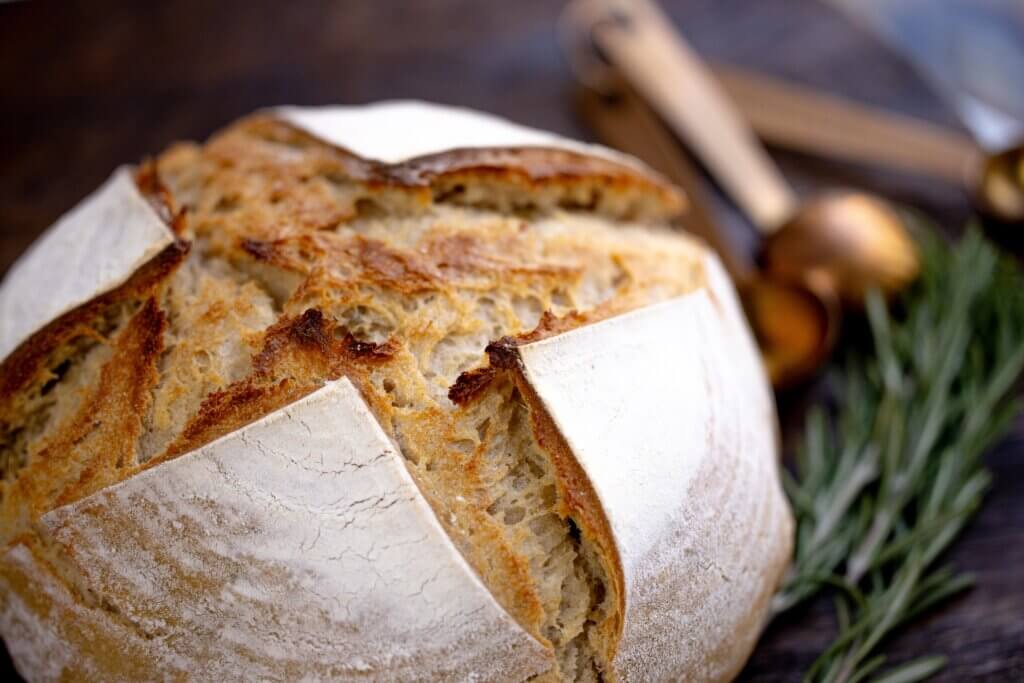
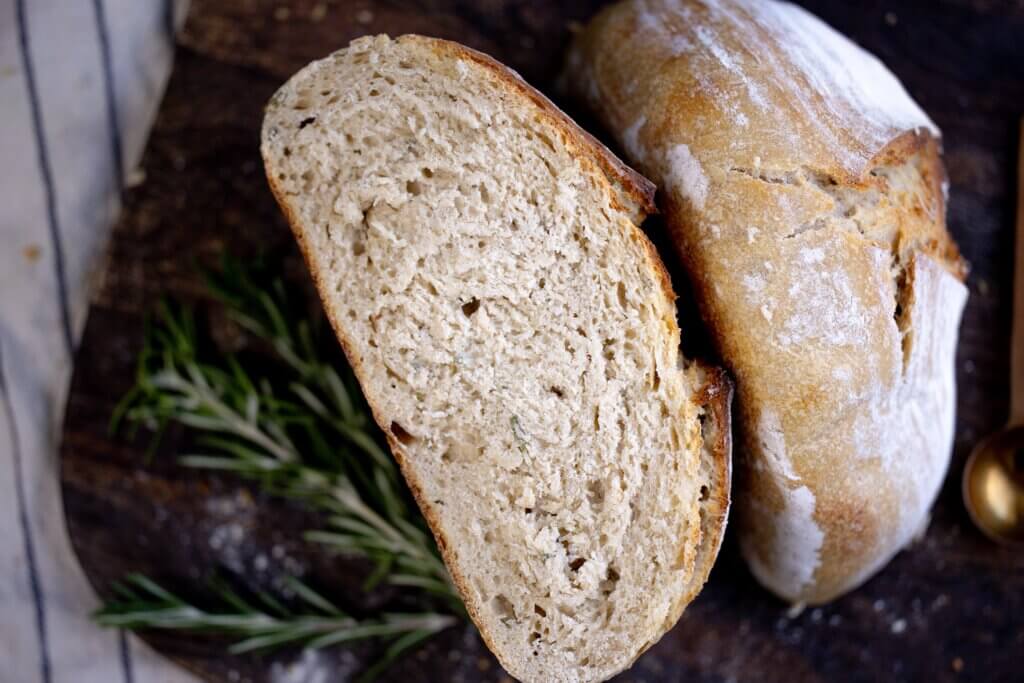
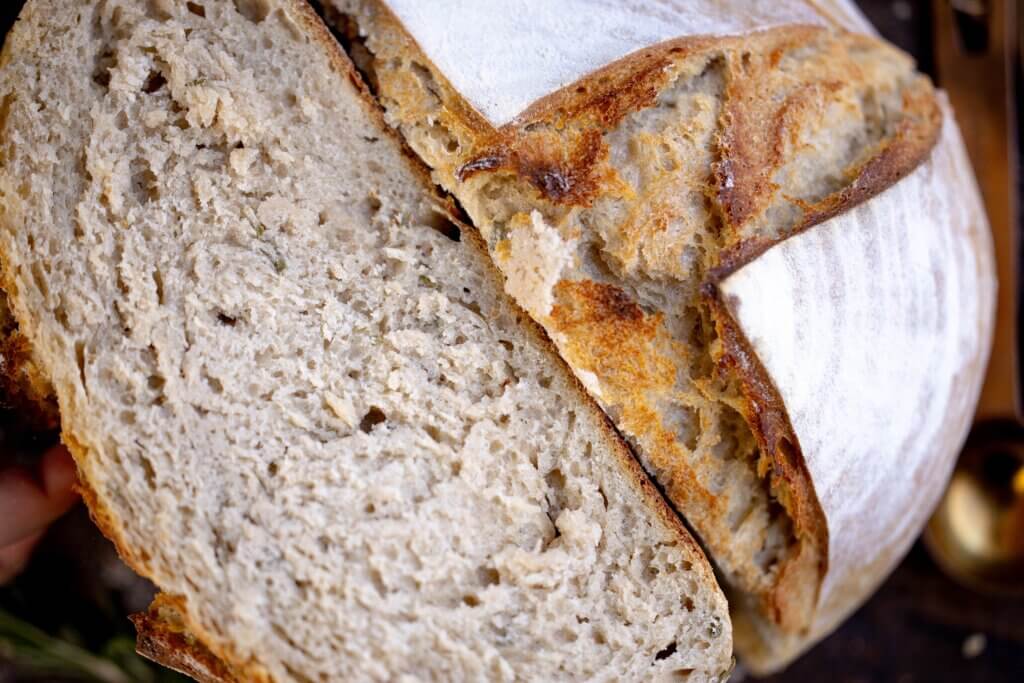
- Rustic Artisan Texture – With its crisp, golden crust and soft, chewy crumb, this rosemary sourdough bread delivers that perfect artisan feel—like something you’d pick up at a bakery, but made right at home.
- Simple Ingredients, Big Taste – The beauty of this rosemary sourdough bread is in its simplicity. Just starter, flour, water, olive oil, salt, and herbs come together to create a loaf that proves you don’t need a long ingredient list for incredible flavor.
- Great for Pairings – Serve alongside hearty fall breads like my Cinnamon Raisin Sourdough Bread for a sweeter option, or try it as part of a spread with Pumpkin Spice Bread for a seasonal twist. And if you love foraging-inspired recipes, my Dandelion Flower Bread makes another unique loaf to add to your table.
What You’ll Need
Tools
Instructions
- Mix all ingredients in a stand mixer with a dough hook. Knead for 10–15 minutes, until the dough is soft, stretchy, and passes the windowpane test.
- Form into a smooth ball and place in an oiled bowl. Cover and let rise at 27°C (80°F) for 5–7 hours, or until doubled.
- Turn out onto a floured surface. Divide in two. Let one piece rest while you shape the first into a loaf. Fold and spin until tight.
- Place seam-side up in a floured banneton. Cover and refrigerate overnight (or proof 1–2 hours at room temp for same-day baking).
- Preheat your Dutch oven at 250°C (500°F) for 1 hour.
- Turn the dough onto parchment, score with a bread lame, and carefully transfer into the Dutch oven.
- Bake 20 minutes covered, then 15–20 minutes uncovered at 235°C (450°F).
- Cool on a wire rack for at least 1 hour before slicing.
Baker’s Schedule
Overnight Rise
Day 1
- 8:00 AM – Mix dough
- 8:30 AM – 2:30 PM – Bulk rise (5–7 hrs)
- 2:30 PM – Shape, refrigerate overnight
Day 2
- 9:00 AM – Bake and cool
Same-Day Bake
- 6:30 AM – Mix dough
- 7:00 AM – 1:00 PM – Bulk rise (5–7 hrs)
- 1:00 PM – 3:00 PM – Shape and proof
- 4:00 PM – Bake, cool, and serve
FAQ
Tips
1. Starter Check:
Make sure your starter is active—do the float test before starting.
2. Kneading Matters:
Knead until stretchy and strong; this builds the gluten needed for a soft, chewy crumb.
3. Warm Rise:
Keep dough around 80°F (27°C). Too cool and it will take longer; too warm and it may over-ferment.
4. Even Rosemary Flavor:
Chop finely and mix well. If using dried rosemary, use less since it’s more concentrated.
5. Scoring for Success:
Don’t be shy with the lame! A deep slash helps your loaf expand beautifully.
6. Crispy Crust Trick:
Lightly spritz with water before baking for extra steam.
7. Cooling Patience:
Let bread cool fully so steam escapes—otherwise, the crumb may turn gummy.
Storage

Rosemary Olive Oil Sourdough Bread
Equipment
- Large mixing bowl
- Measuring cups/spoons or kitchen scale
- Wooden spoon or spatula
- KitchenAid or Stand Mixer (optional)
- Sandwich Loaf Pan (if you want a uniform shape)
- Banneton Basket (for free-form loaves)
- Bench scraper
- Proofing Box (or warm spot in your kitchen)
- Bread Lame or Razor Blade
Ingredients
- 200 g active sourdough starter
- 950 g all-purpose spelt flour or bread flour
- 3 tbsp 20g salt
- 20 g olive oil
- 450 g water
- 3 tbsp chopped fresh rosemary
Instructions
- Mix all ingredients in a stand mixer with a dough hook. Knead for 10–15 minutes, until the dough is soft, stretchy, and passes the windowpane test.
- Form into a smooth ball and place in an oiled bowl. Cover and let rise at 27°C (80°F) for 5–7 hours, or until doubled.
- Turn out onto a floured surface. Divide in two. Let one piece rest while you shape the first into a loaf. Fold and spin until tight.
- Place seam-side up in a floured banneton. Cover and refrigerate overnight (or proof 1–2 hours at room temp for same-day baking).
- Preheat your Dutch oven at 250°C (500°F) for 1 hour.
- Turn the dough onto parchment, score with a bread lame, and carefully transfer into the Dutch oven.
- Bake 20 minutes covered, then 15–20 minutes uncovered at 235°C (450°F).
- Cool on a wire rack for at least 1 hour before slicing.
Notes
Tips
- Starter Check: Make sure your starter is active—do the float test before starting.
- Kneading Matters: Knead until stretchy and strong; this builds the gluten needed for a soft, chewy crumb.
- Warm Rise: Keep dough around 80°F (27°C). Too cool and it will take longer; too warm and it may over-ferment.
- Even Rosemary Flavor: Chop finely and mix well. If using dried rosemary, use less since it’s more concentrated.
- Scoring for Success: Don’t be shy with the lame! A deep slash helps your loaf expand beautifully.
- Crispy Crust Trick: Lightly spritz with water before baking for extra steam.
- Cooling Patience: Let bread cool fully so steam escapes—otherwise, the crumb may turn gummy.
Storage
- Room Temperature: Keep wrapped in a clean towel or bread bag for up to 3 days.
- Refrigerator: Store in an airtight bag for up to a week, though the crust may soften slightly.
- Freezer: Freeze for up to 3 months. Slice before freezing for easy grab-and-go pieces.
- Reheating: Warm slices in a 325°F (160°C) oven for 5–10 minutes. For a softer loaf, wrap in foil.



This article may contain affiliate links, which means I make a small commission at no extra cost to you. As an Amazon Associate, I earn from qualifying purchases at no extra cost to you. You can read the full disclosure policy.